
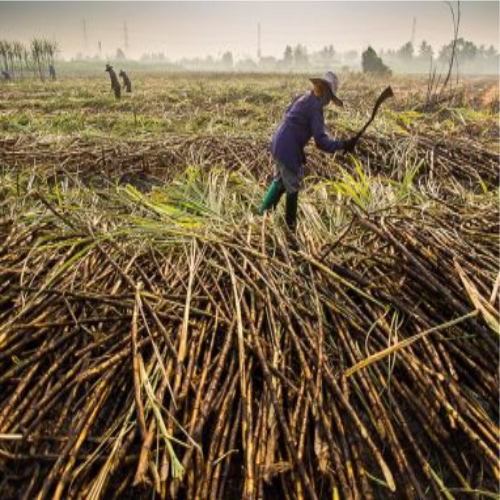
Bangkok: Thailand’s Industry Minister Varawut Silpa-archa has assured sugarcane farmers that the government will investigate delays in the disbursement of financial assistance promised under its fresh cane harvesting programme. The subsidy was introduced to encourage farmers to harvest fresh sugarcane instead of burning fields before harvest, a move aimed at reducing air pollution and seasonal haze.
Under the scheme, the government promised an incentive of 120 baht per tonne of fresh sugarcane harvested. However, farmers who participated in the programme say they have not yet received the promised payments.

Farmer organizations led by the Thailand Sugarcane Planters Federation staged a protest outside the Industry Ministry over the delayed payments. They also expressed concern over the exclusion of farmer representatives from the Cane and Sugar Board.
Industry Minister Varawut Silpa-archa assured the protesting farmers that he would raise the issue with Prime Minister Anutin Charnvirakul to ensure that a solution is found at the earliest.
The minister said the Cabinet approved a 477 million baht budget for the Industry Ministry on June 23. The funds will be used to compensate farmers who have not yet received the government’s financial assistance.
According to farmer representatives, the adoption of fresh cane harvesting has reduced sugarcane burning to just 3.8% of the total harvest. Despite supporting the government’s environmental initiative, many farmers are frustrated by the payment delays and feel that the government’s promise has not been fulfilled.
Earlier, the Cane and Sugar Board directed authorities to conduct field surveys in areas where fresh cane harvesting was adopted to verify farmers’ eligibility for the subsidy.
The Industry Ministry aims to reduce PM2.5 air pollution caused by sugarcane burning while protecting Thailand’s sugar exports from growing international concerns over carbon emissions.
Farmer groups have also accused Industry Permanent Secretary Nattapol Rangsitpol of failing to expedite the appointment of farmer representatives to the Cane and Sugar Board, which comprises representatives from the government, sugarcane growers, and sugar mill operators.















