
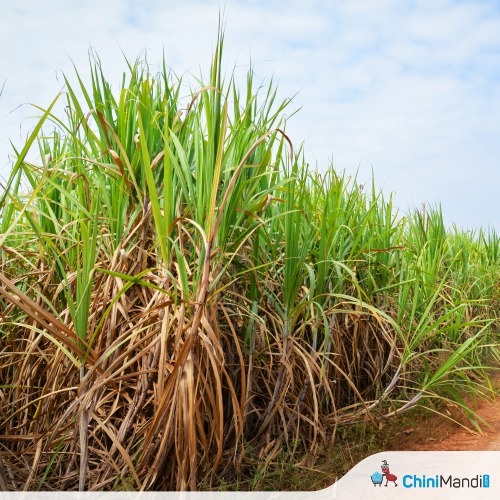
The area under the red rot-susceptible sugarcane variety Co 0238 in Uttar Pradesh has declined from 86 per cent of total sugarcane cultivation in 2020-21 to 29 per cent in 2025-26, reflecting a phased replacement of the variety, the Union Minister of State for Agriculture and Farmers Welfare, Ramnath Thakur, informed the Lok Sabha in response to a question by Shri Rajeev Rai.
According to the state government’s data cited in the written reply, the area affected by red rot disease across Uttar Pradesh’s sugarcane-growing districts rose sharply between 2021-22 and 2023-24, peaking at over 61,900 hectares in 2023-24, before falling steeply to about 6,372 hectares in 2025-26. Districts such as Lakhimpur, Hardoi, Bijnor and Muradabad accounted for a significant share of the disease incidence during the peak years, though the affected area in most districts had reduced substantially by 2025-26.

The Minister said the state government had carried out the production and distribution of red rot-resistant sugarcane seed in a phased manner through breeder, foundation and primary nurseries over the last three years, with total distribution running into several lakh quintals annually across districts including Saharanpur, Muzaffar Nagar, Bijnor and Lakhimpur Khiri. He said the pace of variety replacement was slow in the initial phase given that Co 0238 accounted for more than 86 per cent of total sugarcane coverage and because sugarcane seed multiplication takes a relatively long time. The pace has since accelerated, aided by the availability of newer early, mid and late-maturing varieties such as CoS 19231, CoS 17451, CoLk 16202 and CoS 16233, among others, the reply said.
On the outcome of the replacement programme, the Minister said crop losses due to disease had reduced as a result of the varietal shift, with sugarcane yield in the state rising from 81.34 tonnes per hectare in 2023-24 to 81.97 tonnes per hectare in 2025-26.















