
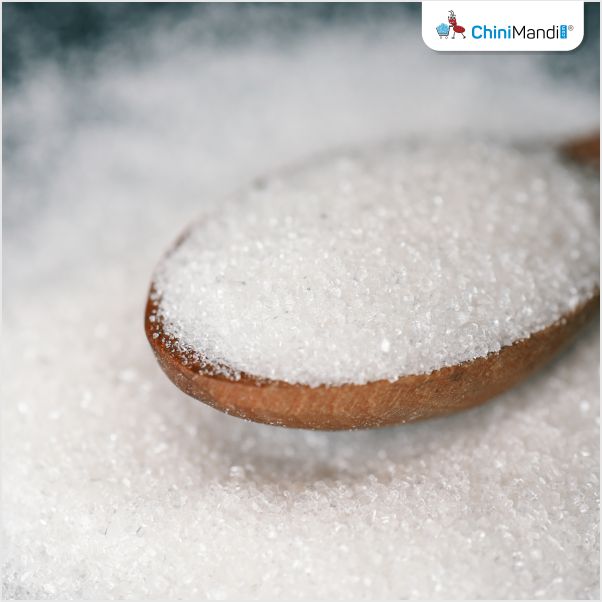
Kathmandu: Sugar prices in Nepal have climbed to around Rs 120 per kilogram from Rs 95-100 per kilogram ahead of the festival season, even as shortages are being reported in the retail market, Ratopati reported.
Sugar consumption is estimated to double during festivals compared with normal periods, raising concerns that delayed import decisions and dwindling domestic stocks could put further pressure on prices and availability.

The situation has emerged only three months after the Nepal Sugar Industry Association assured the government and consumers that domestic stocks were sufficient and that factory prices would not increase. That assurance followed India’s decision to restrict sugar exports, which had raised concerns about Nepal’s dependence on India, its main source of sugar imports. Despite the industry’s earlier assurance, traders and consumers are now reporting both higher prices and difficulty finding sugar in shops.
The government has yet to finalise its import arrangements, while effective market monitoring remains a concern. A parliamentary industry committee was scheduled to discuss sugar supply management on Monday, but the meeting was postponed. With festivals approaching, traders have warned that any further delay in approving imports could turn the current tightness into a more serious shortage.
The Nepal Sugar Industry Association had issued its assurance on Jestha 1, saying there was sufficient sugar in the domestic market and that there was no need for consumers to panic. The association had also indicated that factory-level prices would not rise. The situation, however, appears to have changed significantly within three months. According to a senior official at the Ministry of Industry, Commerce and Supplies, sugar producers are now telling the ministry that their stocks have been exhausted.
Importers are urging the government to act quickly and provide a clear policy on import permissions and quotas. They argue that delays could leave consumers exposed to both rising international prices and tight domestic supplies. Importer Kedar Rizal told Ratopati that the import process had almost stalled because of a lack of clarity and decisions at the ministry and departmental levels. He warned that if imports were not opened in time, artificial shortages could develop.
Rizal also pointed to rising global fuel prices and volatility in commodity markets, which are pushing up the cost of food commodities, including sugar. Since Nepal relies heavily on imports, particularly from India, any increase in international sugar prices is likely to feed into the domestic market. He said higher import costs would inevitably raise the landed price of sugar in Nepal, but argued that timely diplomatic and trade initiatives could help limit the impact on consumers.
Another concern is panic buying. Rizal said rumours of shortages often prompt consumers and retailers to purchase or hold significantly more sugar than they normally would. This can accelerate the depletion of available stocks and create an artificial shortage even when some supplies remain in the system.
The government is now preparing to import sugar from India ahead of the festivals. According to Madhav Mishra, information officer at Food Management and Trading Company Limited, the company is in the final stages of arranging the import of 10,000 quintals, or 1,000 metric tonnes, through a government-to-government (G2G) arrangement with India. The first consignment is expected to reach Nepalgunj within days. The company has indicated that additional quantities could be brought in if the initial supply proves insufficient.
The Salt Trading Corporation has also said it is preparing to strengthen supplies. According to its information officer, Kumar Rajbhandari, the corporation currently has around 1,100 tonnes of sugar in stock and has initiated a process, in coordination with the ministry, to bring in another 2,500 tonnes to meet immediate requirements. It also plans to bring in additional quantities ahead of the festival season if necessary.
Rajbhandari acknowledged that sugar supply has become more difficult following India’s restrictions on sugar exports. He said the corporation had received complaints about shortages in some parts of the market and was working with the ministry to secure additional supplies. The corporation is also exploring tax exemptions and other mechanisms that could enable sugar to be imported more quickly once government approval is received.
The Ministry of Industry, Commerce and Supplies says it is working on the problem on two fronts. According to ministry spokesperson Netra Prasad Subedi, officials are pursuing discussions with the Indian government through diplomatic channels while simultaneously collecting information from domestic sugar producers to determine the country’s actual stocks.
Subedi said the ministry was holding discussions with domestic industrialists to establish how much sugar was available and whether producers could increase their stocks. He also said reports that industrialists had completely run out of sugar had not been officially confirmed, with the government still collecting and verifying the data.
The ministry plans to use the information on domestic production and available stocks to determine the quantity of sugar required for the festival season and subsequently seek the necessary import quota from India. Subedi said the Department of Commerce was also monitoring the market following complaints about rising prices of essential commodities.
With the festival season already beginning, the government faces a narrowing window to prevent the supply situation from worsening. Imports could take time to arrive, particularly if they require government-to-government coordination and approvals. The ministry has therefore said it is making special efforts to finalise the import arrangements quickly and bridge any gap between domestic availability and festival-season demand.
For Nepal’s sugar market, the immediate challenge is therefore twofold: bringing sufficient sugar into the country before festival demand peaks and preventing the expectation of a shortage from itself driving further price increases. Whether the government’s planned imports arrive quickly enough, and in sufficient quantities, will determine whether the current squeeze remains temporary or develops into a wider shortage.















