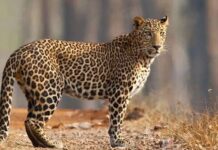
Sugarcane farmers in Pune district’s Junnar region face growing concerns over leopard encounters as harvesting operations gather pace, with six incidents of leopards attacking motorcycle riders reported in the past fortnight, The Times of India reported.
The incidents, recorded by the Junnar forest division, were reported mainly in the Otur and Shirur forest ranges. Although none resulted in fatalities, the attacks have raised concerns among farmers and villagers who regularly travel through agricultural areas, particularly during evening and night hours.

The timing of the incidents coincides with the beginning of the sugarcane crushing season, when harvesting operations disturb plantations that provide shelter and resting places for leopards. As standing cane is cleared, the animals move towards adjoining farms, vegetation patches and irrigation channels, increasing the possibility of encounters with farmers and other commuters.
Smita Rajhans, assistant conservator of forests, said most incidents had occurred during evening hours when leopards were moving between sugarcane fields and neighbouring habitats. She explained that the animals appeared to react defensively when motorcycles suddenly approached them, particularly while they were crossing roads, rather than deliberately chasing riders.
Rajhans said farmers and villagers had been advised to avoid travelling at night through areas where leopard movement was frequently reported. She stressed that sudden encounters with moving vehicles could startle the animals and trigger defensive attacks.
Sugarcane plantations across Junnar and adjoining agricultural belts have long provided suitable cover for leopards. The dense crop offers relatively undisturbed resting places, particularly in areas where farms, roads and human settlements are located close to one another. Harvesting can temporarily change the animals’ movement patterns as they leave cleared plantations and seek shelter in neighbouring areas.
Naresh Dhome, former sarpanch of Pimparkhed village, said leopard sightings had increased in villages that had previously reported attacks. He recalled that two fatal attacks had occurred in the village last year.
Farmers, wildlife activists and local residents have called for greater coordination between sugarcane growers and forest officials during the harvesting season. They have stressed the need to identify vulnerable stretches of rural roads near plantations, install warning signs and alert villagers about frequent leopard movement.
Conservationists have also cautioned that motorcycles travelling at high speeds on narrow agricultural roads leave little time for riders and animals to react during sudden encounters. They have urged farmers and other commuters to exercise particular caution while travelling near standing sugarcane fields, field boundaries and road crossings, especially during dusk and after sunset.