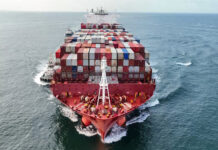
New Delhi [India]: The reopening of the Strait of Hormuz may not automatically restore normal commercial shipping operations, as security risks and the financial costs associated with navigating vulnerable maritime routes could increasingly influence the movement of goods and energy supplies, experts said in a special report published by the Observer Research Foundation (ORF) Middle East.
The report, titled ‘Hormuz: Breaking the Insecurity Continuum’, highlighted how the recent crisis has fundamentally altered risk assessments in global maritime commerce, with implications for shipping insurance, freight costs and international supply chains.

“The reopening of the Strait will not automatically restore normal operations,” wrote Zeynab Malakouti, Research Affiliate at the Middle East Institute, National University of Singapore, in the report.
She noted that several challenges would remain even after the reopening, including the clearance of naval mines, the management of shipping traffic and the establishment of a sustainable security framework for the waterway.
Cauvery Ganapathy, Fellow, Climate and Energy at ORF Middle East, highlighted that the perception of risk would increasingly determine commercial shipping decisions alongside actual restrictions on maritime movement.
“The issue will not remain restricted to whether vessels can physically transit a strait, but will also hinge on institutionalised risk appetites and a cost-benefit analysis of that risk being worth it,” Ganapathy said.
The report also highlighted the growing interconnectedness of the Strait of Hormuz and the Bab el-Mandeb Strait, both of which are critical to global energy supplies and international trade.
Disruptions along these waterways could increase insurance premiums, force shipping companies to undertake costly rerouting and disrupt global logistics, the authors noted.
“Their value increasingly lies not only in the high volume of trade they carry but also in their capacity to amplify local conflicts and translate local disruptions into global economic and geopolitical shocks,” wrote Virginie Collombier and Luigi Narbone, co-founders of the Mediterranean Platform.
The report also highlighted the significance of maritime security in the northwestern Indian Ocean for India, given the region’s importance to global energy routes, supply chains and maritime connectivity.
Sayantan Haldar, Associate Fellow at ORF’s Strategic Studies Programme, identified opportunities for India to strengthen maritime cooperation with its regional and international partners, including through existing connectivity frameworks such as the India-Middle East-Europe Economic Corridor (IMEC).
The report further argued that military operations alone would be insufficient to restore lasting commercial confidence in strategic shipping routes.
“While naval operations are necessary for managing immediate threats, they are insufficient for restoring durable confidence in maritime routes or addressing the underlying drivers of insecurity,” Collombier and Narbone said.
The authors called for greater international cooperation, improved information sharing and coordinated risk assessments to strengthen maritime security and protect global trade against future disruptions. (ANI)