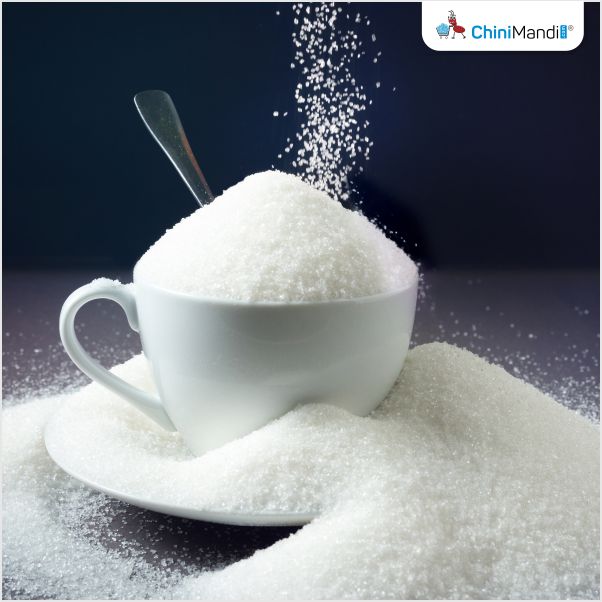
Bengaluru: Sugar, a routine ingredient in restaurant kitchens, is becoming increasingly difficult for some businesses to procure consistently as prices rise and supplies turn unpredictable, The New Indian Express reported.
Restaurants and dessert businesses in Bengaluru say they are monitoring availability more closely, buying in advance and diversifying suppliers to avoid disruptions. The situation has also renewed debate over whether sugar diversion for ethanol production is contributing to tighter supplies, although the link remains contested.

Niharika Peri, founder and head chef of Eatinn’ Love Trattoria, Jayanagar, said her restaurant has not faced any major disruption so far. The restaurant primarily uses brown sugar instead of refined sugar but is monitoring availability closely.
“We are checking availability with suppliers earlier and keeping a buffer rather than waiting until stocks are almost over. However, we don’t want to unnecessarily stock large quantities,” Peri said. She added that the focus is on planning ahead while keeping alternative suppliers accessible.
Gaurav Saria, owner, tea master and chef at Infinitea, said inconsistent availability from regular suppliers has emerged as a bigger concern than price increases.
“When you run an in-house bakehouse everyday, producing breads, cakes and confections, you cannot plan around a supply chain that changes week to week,” he said. According to Saria, the situation has forced the café to tie up additional working capital in inventory, although its range of sugar-free products provides some protection.
Infinitea was earlier paying around Rs 45-48 per kg for sugar but is now sourcing it at approximately Rs 60-65 per kg. The café has responded by purchasing larger quantities in advance and diversifying its supplier base.
“It is not the most efficient use of working capital, but right now, continuity matters more,” Saria said.
Fajr Qureishi, co-founder of F&F Hospitality and associated with Royal China in Bengaluru, said sugar prices have increased from around Rs 38-48 per kg earlier to peaks of Rs 56-60 per kg.
Sugar is used extensively in beverages, desserts, sauces, dressings and marinades. Qureishi advised businesses to track consumption, understand how long each stock lot lasts and replenish supplies before they run out.
Amara Desserts has seen an even sharper increase in procurement costs. Co-founder Edwin Daniel said the business previously paid less than Rs 50 per kg but is now paying around Rs 80 per kg. Its production operations consume about 15-20 kg of sugar a day.
“Sugar is critical across a significant range of products – in cakes, pastries and other baked products, but even more so in desserts and Indian sweets because sugar is not merely a sweetener, it is part of the structure of the product,” Daniel said.
He added that replacing one grade of sugar with another is not always practical because it can affect the final product. “The issue is not that sugar has completely disappeared from the market, but specific grades and specifications are becoming difficult to procure consistently,” he said.
Peri said Trattoria’s relatively low dependence on sugar provides some flexibility. While jaggery or honey could be used in selected preparations, she said they are not direct substitutes because different sweeteners affect flavour and texture differently.
“As a chef, I would rather reformulate a recipe than make a substitution that compromises the dish,” she said.
Qureishi said prolonged supply pressure could eventually lead to visible changes for consumers, including restaurants reducing complimentary sugar sachets, rationing high-sugar beverages or modifying recipes. Alternatives such as honey and agave could be considered, but these may increase costs and alter flavour profiles.
For now, Bengaluru’s restaurants and dessert kitchens are responding through advance procurement, careful inventory management and supplier diversification. If the pressure persists, however, consumers could eventually see higher menu prices or changes in recipes.
For an ingredient that normally disappears into the food, sugar is increasingly becoming a cost and supply-chain concern that restaurants can no longer overlook.