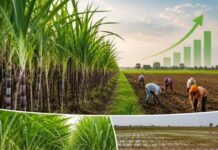
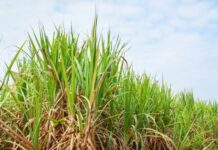
Darbhanga: The Bihar government has begun efforts to expand sugarcane cultivation in areas surrounding the long-closed Raiyam and Sakri sugar mills, with plans to provide farmers with improved varieties of sugarcane seeds free of cost, Jagran reported.
The initiative is aimed at increasing sugarcane production in the region ahead of the proposed revival of the two mills, which have remained closed for more than three decades. Farmers will be able to start cultivation without having to purchase seeds. The deadline for submitting applications under the scheme has been extended to November 16.

The sugarcane area expansion programme has been launched to ensure an adequate supply of raw material for the Raiyam mill and the Sakri mill in Madhubani district. The government aims to encourage large-scale sugarcane cultivation in areas around the mills so that sufficient cane is available when operations resume.
Under the scheme, farmers will receive seeds of improved sugarcane varieties free of charge. The department is also organising farmers’ meetings, workshops and training programmes to familiarise growers with modern cultivation practices. Financial assistance is being provided to reduce the initial cost of cultivation and encourage more farmers to take up sugarcane farming.
Ajit Kumar, Assistant Director of the Sugarcane Department, said farmers can apply online for the scheme until November 16. The earlier deadline was October 31. Applications must be submitted through the department’s official website, ccs.bihar.gov.in.
Farmers holding between 0.25 acre and 2.5 acres of land are eligible for the scheme. Applicants must provide their land revenue receipt and sugarcane registration ID while submitting the online application.
Expanding sugarcane cultivation is being seen as an important step towards restarting the Raiyam and Sakri mills. Increased cane production could offer farmers an alternative crop and, if the mills resume operations, create employment and business opportunities in the region. Thousands of people in the Mithilanchal region are expected to benefit directly and indirectly from the revival of the mills.