
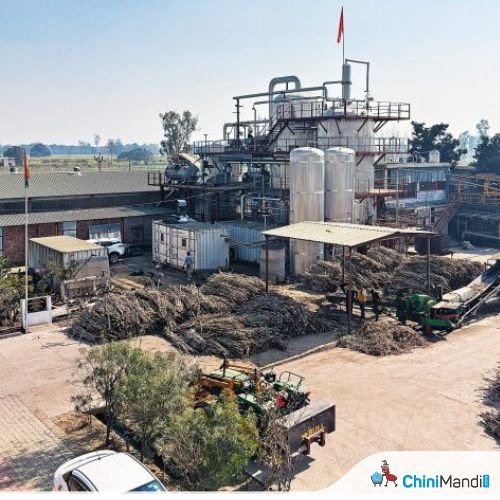
Sugar mills in Bihar are stepping up efforts to strengthen seed cane production and encourage mechanised farming as part of a broader strategy to improve sugarcane productivity and increase farmers’ income across the state.
As part of the initiative, Hasanpur Sugar Mill has announced plans to procure semi-seasonal sugarcane from farmers for use as seed cane. The move is expected to ensure the availability of quality planting material while providing an additional income opportunity for growers.

Mill officials said sugarcane grown during the summer season will be purchased and supplied as seed to other farmers. Only disease-free, healthy and well-developed cane will be selected for distribution under the programme. The mill plans to procure seed cane from farmers during March and April at a rate of ₹500 per quintal, Hindustan reported.
The initiative is being supported by efforts to expand irrigation facilities. Sugar mills are facilitating the installation of subsidised borewells in farmers’ fields, although industry representatives have stressed the need for improved electricity connectivity to ensure regular irrigation. Experts say sugarcane requires eight to ten irrigations during the crop cycle for optimum yields.
Large-scale planting of the CoGRO 238 sugarcane variety is currently underway in the region, with nearly 25 acres being planted daily. The variety is known for its high productivity, with yields ranging from 500 to 600 quintals per acre under suitable conditions.
Industry officials have also highlighted the growing role of mechanisation in sugarcane farming. The use of modern equipment such as Turbo Cane Planters is helping farmers overcome labour shortages while reducing planting time and cultivation costs. According to sugarcane experts, mechanised planting can cover one acre in about three hours, significantly improving operational efficiency.
Executive Chairman Ashok Mittal said sugarcane cultivation takes around 10 to 12 months to mature and that wider adoption of mechanisation is essential for sustaining productivity growth. Sugarcane Advisor Shambhu Prasad Rai noted that mechanisation is reducing farmers’ dependence on seasonal labour and enabling faster field operations.
Deputy General Manager (Cane) Ramashankar Prasad said traditional methods of sugarcane cultivation were often labour-intensive and costly. With labour shortages becoming increasingly common, mechanisation is emerging as a practical solution for farmers across the state.















