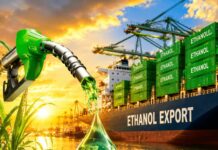
New Delhi: The Centre’s recent clarification on E20 petrol has addressed several concerns surrounding ethanol-blended fuel, but key questions remain over pricing, taxes and the actual cost to motorists.
Earlier this month, the government released fact sheets explaining that E20 petrol is no longer cheaper than conventional petrol because ethanol itself has become a more expensive input. The clarification comes amid growing debate over the nationwide rollout of 20% ethanol-blended petrol, Business Standard reported.

However, the explanation differs from the recommendations made in the 2021 NITI Aayog roadmap, which suggested that ethanol-blended petrol should be priced lower than regular petrol to encourage adoption. The report also recommended tax incentives for E10 and E20 fuels to offset the lower fuel efficiency associated with ethanol blends.
The latest government fact sheets do not provide a detailed break-up of E20 pricing, including the refinery or depot cost of petrol, the cost of ethanol blending, or the tax component of each litre sold.
Ethanol procurement costs have increased
The government fixes procurement prices for sugarcane-based ethanol through the Cabinet Committee on Economic Affairs, while prices for grain-based ethanol are determined by oil marketing companies.
Procurement prices have risen substantially since the E20 roadmap was prepared. Ethanol produced from C-heavy molasses increased from Rs 46.66 per litre in Ethanol Supply Year (ESY) 2021-22 to Rs 57.97 per litre in ESY 2024-25. Maize-based ethanol prices rose from Rs 52.92 to Rs 71.86 per litre during the same period.
According to Grain Ethanol Manufacturers Association President CK Jain, feedstock accounts for 60-75% of ethanol production costs.
Anuj Agarwal, Founder and Chairman of Sunbridge Group, said procurement prices alone do not explain the economics of ethanol production.
“Ethanol economics cannot be viewed through the lens of procurement price alone. While feedstock is a major cost, production is also influenced by energy, logistics, financing, plant efficiency and compliance costs,” he said.
Pricing structure remains unclear
E20 petrol contains 80% petrol and 20% ethanol, making a direct comparison dependent on the cost of both components, along with transportation, storage, blending expenses, oil marketing company margins, taxes and dealer commissions.
Indian Oil’s published price build-up for Delhi, effective May 25, shows a dealer price of Rs 81.08 per litre before VAT. After adding dealer commission of Rs 4.45 and VAT of Rs 16.59, the retail price reaches Rs 102.12 per litre.
However, the published price does not separately disclose the cost of ethanol, the petrol component or blending expenses. Similarly, the Petroleum Planning and Analysis Cell (PPAC) publishes only the overall retail price for petrol without distinguishing between E20 and unblended petrol.
Shyamasis Das, Fellow at the Centre for Social and Economic Progress, said consumers would benefit from a transparent price break-up showing crude oil costs, refining costs, ethanol procurement, transportation, storage, blending costs, taxes and other charges.
Without such disclosures, experts say it is difficult to determine how much E20 costs to produce, who bears the additional expense and whether consumers are paying more.
Mileage affects operating costs
Fuel efficiency remains another key factor in determining the actual cost of using E20.
The Ministry of Petroleum and Natural Gas has acknowledged that some vehicles may experience a 3-5% reduction in fuel economy when using E20.
The 2021 NITI Aayog roadmap projected fuel efficiency losses of 6-7% for older four-wheelers designed for pure petrol, 3-4% for older two-wheelers and 1-2% for newer four-wheelers calibrated for E20.
At Delhi’s current petrol price of Rs 102.12 per litre, a vehicle delivering 20 km per litre incurs a fuel cost of about Rs 5.11 per kilometre. If mileage declines by 3-5%, fuel cost rises to around Rs 5.26-Rs 5.37 per kilometre.
According to the illustrative calculation, E20 would need to be priced about 3-5% lower, or roughly Rs 97-99 per litre, to fully offset the reduction in mileage.
Tax incentives not visible to consumers
Although ethanol supplied for blending attracts only 5% GST, petrol remains outside the GST framework and continues to attract central excise duty and state VAT.
PPAC data shows central duties and cesses of Rs 16.90 per litre on petrol, along with an additional basic excise duty of Rs 2 per litre on unblended petrol sold at retail. E20 does not attract this additional levy, providing it with a tax advantage over pure petrol.
However, there is no separate lower VAT rate for E20 in most states, meaning the tax benefit is not directly reflected in retail fuel prices.
The NITI Aayog roadmap had anticipated this situation, recommending GST concessions and retail tax incentives if ethanol prices exceeded petrol prices to compensate consumers for reduced fuel efficiency.
Shyamasis Das said any savings from ethanol blending should benefit consumers if they lower retail prices but cautioned that subsidising E20 could create financial burdens for oil marketing companies or the government.
Demand for greater transparency
Experts say the government’s assertion that E20 has become more expensive because of higher ethanol costs cannot be fully assessed without detailed disclosure of pricing and tax components.
They believe publishing a comprehensive price build-up for E20 would enable consumers to understand whether the higher production cost is justified and whether any financial benefit from ethanol blending reaches motorists at the fuel pump.