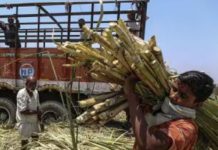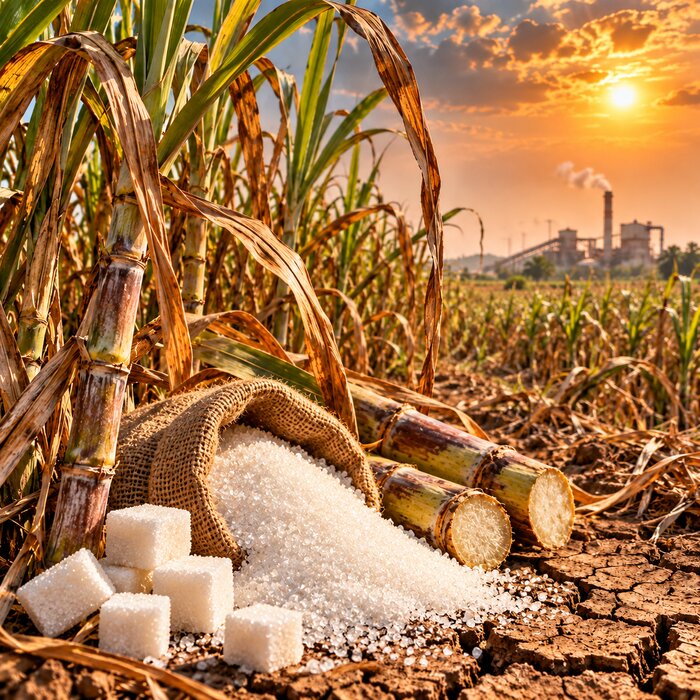
Beed: Sugarcane cultivation in Maharashtra’s drought-prone Marathwada region is increasingly under scrutiny as severe water shortages threaten crop production, farmers’ incomes and the financial health of sugar mills, despite a steady expansion in cane acreage over the past five years, The Times of India reported.
The region is facing widespread rainfall deficiency, with Beed district recording a 40% shortfall this year. The dry conditions have damaged sugarcane crops, with farmers facing the possibility of substantial yield losses. Sugarcane requires regular irrigation, generally at intervals of around two weeks, making its cultivation particularly vulnerable in areas struggling with water scarcity.

Despite the recurring droughts, sugarcane cultivation in Marathwada has grown by nearly 36% in five years, increasing from 2.8 lakh hectares in 2021-22 to 3.8 lakh hectares in 2025-26, according to the Maharashtra Agriculture Department. The region accounts for 27.5% of the state’s total sugarcane area.
Marathwada has 68 sugar factories, representing nearly 32% of Maharashtra’s 208 sugar mills. However, the growing area under cane has raised concerns amid worsening water availability. Drought conditions have affected 86.6% of talukas across Maharashtra, while all 76 talukas in Marathwada are affected.
Water experts have warned that expanding sugarcane cultivation in Marathwada could further strain groundwater resources, worsen water scarcity and contribute to land degradation. They have called for a shift towards less water-intensive crops, including pulses and oilseeds, which are better suited to drought-prone areas.
A 2020 NITI Aayog task force report on the sugar industry estimated that producing one kilogram of sugar requires 1,500–2,000 kg of water. The water required to irrigate one hectare of sugarcane could instead be used to grow rabi jowar across 5.5 hectares, highlighting the pressure cane cultivation places on limited water resources.
Experts have also stressed the need to implement the Maharashtra Irrigation Act, 1976, to enable restrictions on water-intensive crops during severe shortages. The Act has remained without statutory rules for nearly five decades, limiting its implementation.
Sugarcane continues to attract farmers because of the Fair and Remunerative Price (FRP) announced by the central government, which offers an assured price for their produce. Good rainfall in earlier years also encouraged the expansion of cane cultivation across Marathwada.
The crop is considered relatively manageable when water is available and can remain productive for up to three years, reducing the need for fresh planting. Sugar mills also arrange and pay for harvesting labour, adding to its appeal among growers.
Political support for sugarcane cultivation and the expansion of ethanol production have also contributed to the crop’s growth. Ethanol manufacturing has created an additional outlet for surplus cane, strengthening demand for the crop and supporting the sugar industry.
The continuing drought is expected to affect sugar factories in Marathwada through lower cane yields, reduced availability of raw material and a shorter crushing season. Reduced cane supply could weaken mill revenues even as factories remain obligated to pay the Fair and Remunerative Price to farmers.
The Maharashtra State Cooperative Sugar Factories Federation has sought subsidy assistance from the government to help mills manage the financial strain arising from reduced production and revenue. The crushing season in some areas could shrink to around three months from the usual six months, further affecting factory operations.
The worsening water situation is also prompting farmers to reconsider sugarcane cultivation, with some expected to shift towards crops such as soybean and tur in the coming season. The growing water crisis has renewed the debate over whether expanding sugarcane cultivation is sustainable in Marathwada, where drought conditions continue to threaten agriculture.