
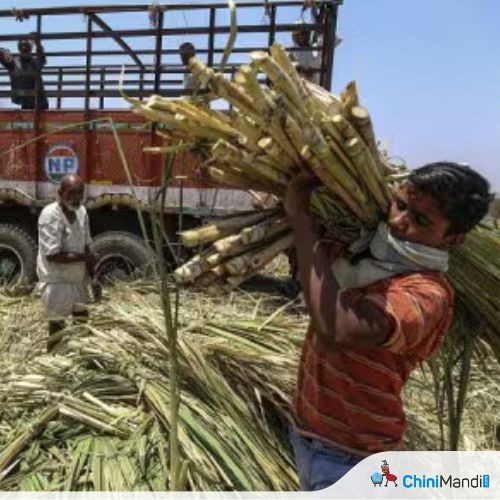
A farmer in Haryana’s Yamunanagar district has reported higher income and lower water use after adopting a wide-row spacing method in sugarcane cultivation, highlighting the benefits of mechanised and efficient farming practices, The Indian Express reported.
Nirmal Singh, a 41-year-old farmer from Gillor Majri village, has been using the technique for the past 15 years on his 30-acre farm. By planting sugarcane in rows spaced four feet apart instead of the traditional 2.5 feet, he produces an average of 425 quintals per acre and earns nearly Rs 15 lakh annually. His profit stands at about Rs 50,000 per acre, compared to around Rs 30,000 under conventional methods.

The method reduces the number of rows per acre but results in healthier crops and allows for mechanised operations, cutting down labour requirements. It also lowers input costs, as only 18–20 quintals of seed cane are needed per acre compared to 35 quintals in traditional farming.
Officials said the technique significantly reduces water consumption, with usage dropping to about 9–10 lakh litres per acre, nearly half of the 18–20 lakh litres required under conventional practices. Irrigation time is also reduced, allowing farmers to save both water and energy.
To encourage adoption, the Haryana government has increased incentives for farmers using the wide-row method from Rs 3,000 to Rs 5,000 per acre. Authorities said the approach not only improves yield and profitability but also helps address labour shortages and enhances juice quality.
Despite these advantages, adoption remains limited, with only about 10 per cent of farmers using the method.
Meanwhile, the state has seen a decline in sugarcane output in recent years. Officials said production in 2025–26 is estimated at 536.24 lakh quintals, significantly lower than 858.78 lakh quintals recorded in 2020–21. The area under cultivation has also been shrinking since 2022–23, affecting cane availability for mills and reducing their operating days.
Experts said wider adoption of efficient techniques like wide-row spacing could help improve productivity and address some of the challenges facing the sector.















