
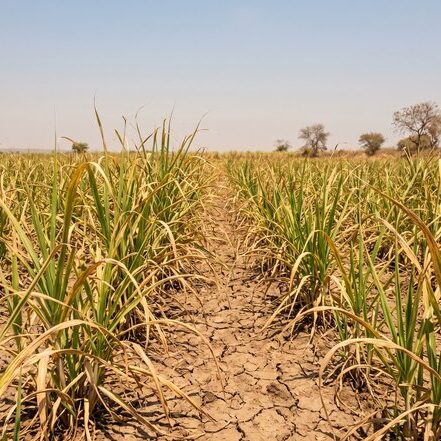
Sugarcane once played a central role in Puerto Rico’s economy, but efforts to protect the crop from rats eventually created a long-running ecological and public health problem.
In the 1870s, sugarcane plantation owners across the Caribbean imported the small Indian mongoose from India as a biological control measure against rats in sugarcane fields. The idea was simple: introduce a predator to reduce a pest that could damage crops, The Times of India reported.

The strategy, however, failed to deliver the expected results. Rats were mainly active at night, while mongooses were active during the day, limiting encounters between the two species. Instead of controlling the rat population effectively, the mongooses spread rapidly across the islands.
Their impact on sugarcane production was therefore limited, while their effect on native wildlife was significant. Mongooses preyed on native birds, reptiles, amphibians and other animals that had evolved without such predators. The species subsequently became invasive across several Caribbean islands, including Puerto Rico.
The consequences eventually extended beyond sugarcane fields and ecosystems.
Puerto Rico recorded its first laboratory-confirmed mongoose rabies outbreak in 1950. Since then, mongooses have become the leading source of wildlife rabies on the island. Recent surveillance has attributed more than 70% of animal rabies cases in Puerto Rico to mongooses, although the proportion varies by year and reporting method.
The species is also considered a major terrestrial wildlife reservoir for rabies in several Caribbean countries and islands, including Grenada, Cuba and the Dominican Republic.
Research has found widespread but uneven exposure to rabies among Puerto Rico’s mongoose population. A 2015 study of 112 mongooses found rabies antibodies in 39% of the animals tested. Another study conducted between 2014 and 2021 tested 464 mongooses across 11 sites and found antibodies in about 17% of them.
The difference in the reported rates reflects variations in location and habitat, but both studies point to widespread exposure among mongooses.
The problem has also become a human health concern. Researchers estimate that about 280 people in Puerto Rico are bitten by mongooses each year. Because untreated rabies is almost always fatal, mongoose bites can require urgent medical treatment and post-exposure vaccination.
Puerto Rico recorded its first human death linked to a mongoose bite in 2015.
Managing the problem is difficult because mongooses are widespread and their populations overlap with those of free-roaming dogs. This creates opportunities for rabies transmission between wildlife and domestic animals.
Scientists are now using disease-transmission models to identify areas where surveillance and control efforts could have the greatest impact. The models consider factors such as mongoose density, distribution, habitat, movement patterns and recorded rabies infections.
The experience offers a cautionary lesson for sugarcane agriculture: a biological control measure introduced to protect an important crop can have consequences far beyond the fields it was designed to protect.
What began as an attempt to control rats in Caribbean sugarcane plantations ultimately helped establish an invasive species that continues to affect native wildlife and remains a significant rabies reservoir in Puerto Rico.














