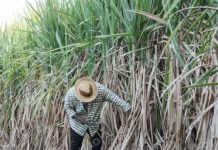
Bacolod City: Nearly 40,000 sugarcane farmers in the Philippines’ Negros Island Region have received emergency cash assistance after their crops were affected by red-striped soft scale insect (RSSI) infestations, with payouts reaching 410.28 million Philippines peso, reported the Inquirer, citing Regional Director Arwin Razo.
The Department of Social Welfare and Development (DSWD)–Negros Island Region has provided the assistance to 39,847 farmers as of Sept. 18. Further disbursements are expected to continue until the end of the year, with the agency awaiting additional funding.

Razo said total assistance under the programme could eventually surpass 1 billion Philippines peso.
Negros Occidental has accounted for most of the assistance so far, with 352.74 million Philippines peso distributed among 34,164 sugarcane farmers.
Kabankalan City recorded the highest payout in the province, receiving 68.92 million Philippines peso for 6,675 beneficiaries. It was followed by La Castellana, where 47.94 million Philippines peso was distributed to 4,643 farmers, and Himamaylan City, which received 36.64 million Philippines peso for 3,549 beneficiaries.
Murcia received 23.97 million Philippines peso, while Hinoba-an and Isabela each received 23.36 million Philippines peso, benefiting 2,262 farmers in each area.
Farmers in Binalbagan, Cadiz, Cauayan, Hinigaran, La Carlota, Manapla, Moises Padilla, Sagay, San Carlos, Sipalay, Talisay and Salvador Benedicto were also covered under the emergency assistance programme.
Negros Oriental has received 57.54 million Philippines peso, benefiting 5,683 sugarcane farmers.
Mabinay accounted for the largest share in the province, with 25.83 million Philippines peso distributed to 2,551 beneficiaries. Canlaon City received 8.82 million Philippines peso for 871 farmers, while Bais City received 8.49 million Philippines peso for 839 beneficiaries.
The programme also covered farmers in Amlan, Basay, Bayawan City, Dauin, Jimalalud, Pamplona, Santa Catalina, Siaton, Tayasan and Zamboanguita.
The ECT programme is aimed at helping farmers manage the financial impact of the RSSI infestation.
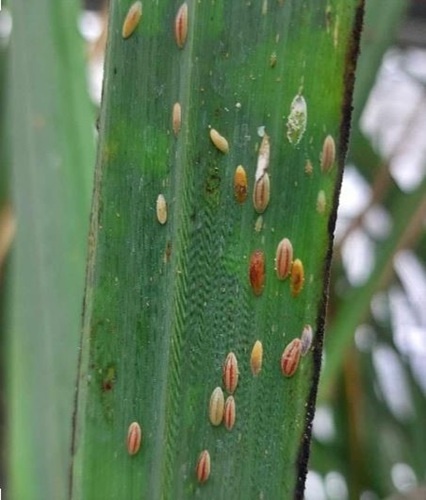
The pest damages sugarcane by feeding on sap from the stalks and leaves. It also produces honeydew, which encourages the growth of black sooty mould on the plant surface. The mould can restrict sunlight and interfere with photosynthesis.
According to the Sugar Regulatory Administration, severe RSSI infestations can stunt sugarcane growth and reduce sugar content by as much as 50%.
The emergency payments are intended to provide financial support to farmers facing losses caused by the pest outbreak, while additional beneficiaries are expected to receive assistance as further funds become available.