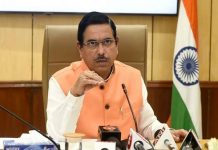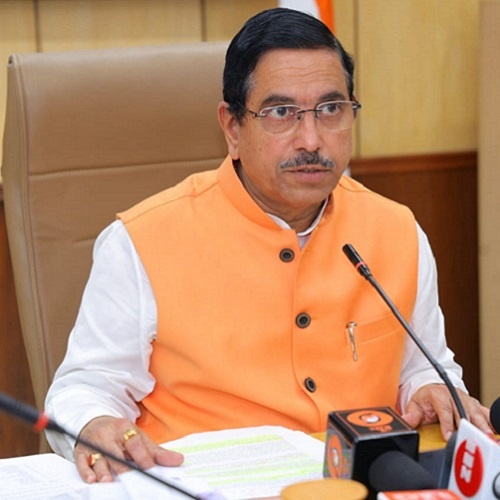
Union Minister Prahlad Joshi on Tuesday offered to arrange for an oil marketing company (OMC) officer to participate in joint testing of fuel samples alongside Karnataka government officials, challenging state Food and Civil Supplies Minister Rizwan Arshad to oversee the exercise, The Times of India reported.
The offer comes amid an escalating dispute over ethanol blending in petrol, with Karnataka Chief Minister DK Shivakumar questioning the Centre’s accountability and alleging that higher ethanol content was affecting vehicle performance.

Joshi asked Arshad to participate in the testing process alongside officials from both sides, offering to let the state minister assess the findings. He accused the Congress of politicising the issue to divert attention after its protests over the Special Intensive Revision (SIR) of electoral rolls and electronic voting machines failed to gain public support.
Defending the Centre’s ethanol blending policy, Joshi said it was designed to support farmers and reduce India’s dependence on imported crude oil. He also argued that blending beyond the prescribed limits would not make commercial sense, given the relative cost of ethanol and petrol. Citing prices, he said petrol was priced at around ₹53 per litre, while ethanol cost between Rs 57 and Rs 71, depending on whether it was produced from different feedstocks, including maize.
Joshi maintained that fuel samples could be tested only at designated laboratories equipped with specialised facilities, referring to provisions introduced under the Petroleum and Diesel Order in 2005. He also called on Karnataka to examine the test results already shared by the Centre and disclose the remaining details.
Arshad rejected Joshi’s intervention, arguing that the Union minister did not handle the petroleum portfolio and was speaking on behalf of Union Petroleum Minister Hardeep Singh Puri. He said Karnataka was not opposed to ethanol blending but wanted safeguards to ensure consumers were not misled or supplied substandard fuel.
Arshad alleged that petrol containing 26% to 31% ethanol was being sold as E20 fuel. He questioned the Centre’s claim that 893 fuel samples tested nationwide, including 56 from Karnataka, had met the prescribed standards. He also raised concerns over oil marketing companies testing their own products and certifying their compliance.
According to Arshad, Karnataka had submitted 63 fuel samples to OMC laboratories, but the reports did not disclose the actual ethanol content. He called for an independent verification mechanism, public disclosure of ethanol percentages at petrol pumps and an option for consumers to choose between E10, E20 and unblended petrol.
Chief Minister Shivakumar also joined the debate, alleging that ethanol blending at levels ranging between 20% and 30% was affecting vehicle mileage, damaging engines and causing vehicles to stall. He urged the Centre to investigate the quality and source of fuel being supplied rather than directing criticism at petrol pump operators.
Shivakumar said the issue should be treated as a consumer safety concern rather than a political dispute, calling for accountability over the quality of petrol supplied to motorists.