
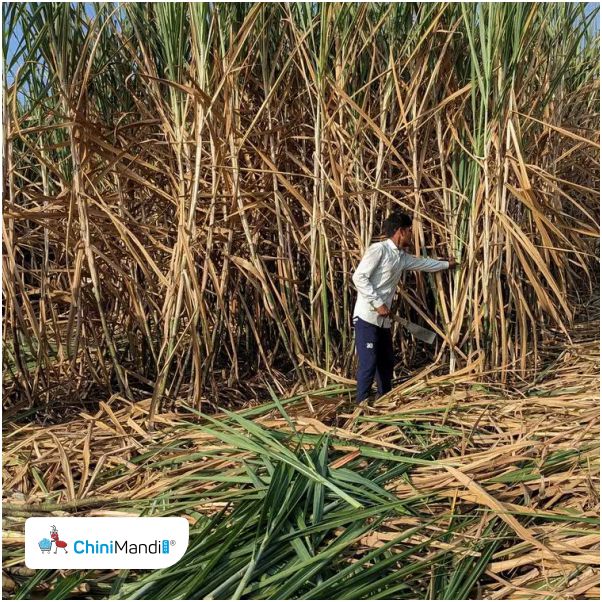
Chandigarh: Punjab has stepped up efforts to make sugarcane a more remunerative crop by expanding mechanisation, promoting modern cultivation practices and providing direct financial incentives to growers as the area under the crop rises in the 2026-27 season, The Tribune reported.
Agriculture and Farmers Welfare Minister Gurmeet Singh Khudian said the area under sugarcane had increased to 1,16,131 hectares in 2026-27 from 1,11,818 hectares in 2025-26. The state is targeting nearly 700 lakh quintals of sugarcane production this season, subject to favourable weather conditions.

Of the total acreage, 47,295 hectares is under ratoon crop, while 51,174 hectares is under spring crop and 17,662 hectares under autumn crop.
To encourage the adoption of recommended cultivation practices, the Punjab government has introduced an incentive of ₹3,200 per acre for farmers establishing demonstration plots during the 2026-27 season. The programme will cover 12 districts — Amritsar, Gurdaspur, Hoshiarpur, Jalandhar, Shaheed Bhagat Singh Nagar, Fatehgarh Sahib, Rupnagar, SAS Nagar, Patiala, Fazilka, Faridkot and Kapurthala.
The demonstration plots will focus on practices such as wide-row spacing, trench planting, intercropping, mulching and scientific ratoon management, aimed at improving productivity while reducing cultivation costs.
The state is also encouraging farm mechanisation by providing a 40 per cent subsidy on equipment such as sugarcane harvesters, small tractors, cane planters and ratoon managers.
Khudian said joint teams from Punjab Agricultural University (PAU), the Agriculture Department and sugar mills were conducting awareness camps across the state to promote improved sugarcane cultivation.
The outreach programmes are covering wide-spacing trench planting, primary seed nurseries, disease-free certified varieties, balanced fertiliser application, integrated pest management and scientific ratoon management.














