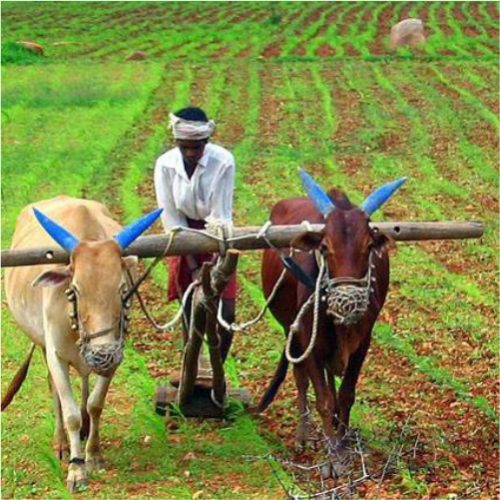
New Delhi: With southwest monsoon rainfall remaining significantly below normal this season, the Centre has identified 315 districts across the country as vulnerable to weak rainfall conditions and intensified preparedness measures to protect Kharif agriculture.
Addressing a press conference after a high-level review meeting, Union Agriculture and Farmers Welfare Minister Shivraj Singh Chouhan said rainfall received so far is around 43 per cent below normal and forecasts from the India Meteorological Department indicate that rainfall is likely to remain weak during the week ending July 2.

He said the delayed monsoon poses a direct challenge to Kharif cultivation, especially in rainfed regions where agriculture largely depends on seasonal rainfall.
Based on a joint assessment by the Ministry of Agriculture and ICAR, 315 districts have been identified as potentially affected due to low rainfall and inadequate irrigation coverage.
Among them, 111 districts have been placed in the high-priority category where irrigation coverage remains below 25 per cent. Another 76 districts have been classified as medium priority with irrigation availability between 25 and 50 per cent, while 128 districts fall under the lower-priority category because of relatively stronger irrigation infrastructure.
The identified districts are spread largely across 12 states including Madhya Pradesh, Maharashtra, Gujarat, Uttar Pradesh, Rajasthan, Karnataka, Bihar, Jharkhand, Telangana, Andhra Pradesh and Odisha.
Chouhan said the government has begun advance planning rather than waiting for weather conditions to worsen and has activated district-level preparedness to minimise disruption to farming activities.
To support local response, ICAR and ICAR-CRIDA have prepared District Agriculture Contingency Plans for every district. These plans are designed around local rainfall patterns, climate conditions, water availability, cropping systems and risk factors.
The contingency measures include shifting to alternative crops in areas receiving lower rainfall, encouraging crop diversification, improving water-use efficiency and creating additional income opportunities for farmers.
The Minister directed states and district administrations to ensure that these plans move beyond administrative records and are implemented at the field level wherever required.
Water conservation has also been placed at the centre of preparedness efforts.
States have been instructed to immediately repair and strengthen ponds, reservoirs, streams, farm ponds, check dams, stop dams and temporary bunding structures to improve water storage capacity ahead of possible rainfall shortages.
Sensitive districts have additionally been advised to prioritise drinking water availability and arrange transfers from surplus regions if necessary.
The Centre has also advised states to promote short-duration and lower-water-requirement crops in vulnerable regions and maintain readiness to switch to alternative crop options if rainfall delays continue.
Chouhan said preparations are being made to ensure agricultural activity continues despite uncertain monsoon conditions and to minimise risks to farmers during the Kharif season.