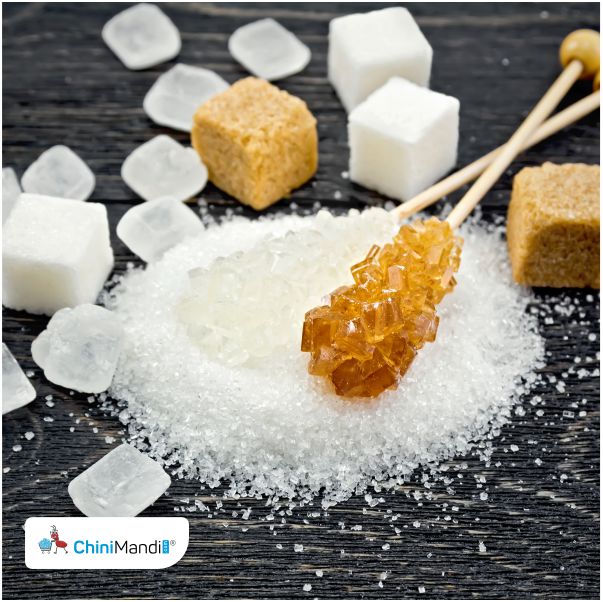
Hyderabad: Sugar prices in Hyderabad have surged nearly 78% to Rs 80 a kg from Rs 45, adding to household grocery bills ahead of the festive season, The New Indian Express reported. The sharp increase is also raising input costs for sweet shops, bakeries and caterers that use sugar in large quantities.
The rise comes against a broader inflationary backdrop. Telangana recorded retail inflation of 6.32% in July, the highest among states for the seventh consecutive month, compared with the national rate of 4.45%. Rural inflation in the state stood at 6.86%, while urban inflation was 5.92%.

For consumers, sugar is among the most visible recent price increases. A 5-kg purchase that cost around Rs 225 at Rs 45 a kg now costs about Rs 400. The impact could become more pronounced during the festive season, when households traditionally increase purchases of sugar for sweets and other preparations.
Sweet shops and caterers are also likely to face higher production costs if sugar prices remain elevated.
Retailers said the price increase was already affecting buying patterns, with some customers purchasing smaller quantities while others are stocking up in anticipation of further price increases. Retailers said customers are increasingly checking prices before making purchases, with some households cutting back on the quantity bought while regular customers are purchasing additional sugar amid expectations of further price increases.
However, retailers cautioned consumers against excessive stockpiling during the monsoon. High humidity and moisture can cause sugar to cake and deteriorate when stored for prolonged periods in poorly ventilated or damp conditions.
Retailers said consumers buying large quantities to hedge against further price increases could end up losing the benefit if the sugar is not stored properly. Moisture can cause clumping, while prolonged storage in unhygienic conditions can lead to infestation and wastage.
According to the Price Monitoring Division, sugar is not the only kitchen staple to have recorded significant price movements. Sunflower oil has seen one of the sharpest increases in Telangana, rising from Rs 110.50 a kg in August 2024 to Rs 192.73 in August 2026, an increase of 74.4%.
Karnataka recorded a 68.1% rise in sunflower oil prices, from Rs 114.38 to Rs 192.25, while Tamil Nadu saw a 67.3% increase, from Rs 115.71 to Rs 193.58. Andhra Pradesh recorded a 63.4% rise, from Rs 115.50 to Rs 188.67.
The longer-term picture, however, is less dramatic. Telangana’s sunflower oil price stood at Rs 179 a kg in August 2022, making the increase to Rs 192.73 in August 2026 just 7.7%. Prices had fallen considerably by 2024 before rising again.
Rice, another major component of the food basket, has also become costlier over five years. In Telangana, prices rose from Rs 41.80 a kg in August 2022 to Rs 57.64 in August 2026, an increase of 37.9% — the highest among the four southern states compared.
Karnataka recorded a 27.9% rise, from Rs 48.25 to Rs 61.72, while Tamil Nadu saw a 24.4% increase, from Rs 48.44 to Rs 60.25. Andhra Pradesh recorded an 8.7% rise, from Rs 51 to Rs 55.44.
Not all commodities have moved upwards. Toor dal prices have fallen substantially from their 2024 peak. In Telangana, its price rose from Rs 99.20 a kg in 2022 to Rs 163.50 in 2024 before declining to Rs 124.73 in 2026. The latest price is 23.7% below the 2024 level, though still 25.7% above the 2022 price.
In Andhra Pradesh, toor dal prices fell from Rs 166.25 in 2024 to Rs 117 in 2026, while Karnataka recorded a decline from Rs 163.86 to Rs 121. Tamil Nadu saw prices fall from Rs 172.89 to Rs 131.31.
Telangana’s retail inflation rose from 4.92% in January to 6.32% in July, after touching 6.36% in June. The state had recorded deflation in five months during 2025, making the current reversal particularly notable.
The rural-urban gap is also significant, with rural inflation at 6.86%, indicating that price pressures are being felt beyond Hyderabad and other urban centres. Nationally, retail inflation rose to 4.45% in July, while food inflation reached 5.52%.
Economist B Sudhakar Reddy, director, ICSSR-SRC and dean of the Faculty of Social Sciences at Osmania University, said Telangana’s inflation was no longer being driven by one or two commodities, with price increases visible across food, transport, housing, healthcare and services.
The inflation picture has also been influenced by the rebasing of the CPI series in 2024. Economists noted that Telangana’s current position at the top of the inflation rankings is particularly striking as the state had recorded the country’s lowest inflation just a year earlier.
Reddy said inflation in Telangana stood at only 1.06% in March 2025, while the state also experienced periods of deflation during mid-2025. The sharp turnaround reflects both changes in statistical weighting under the new CPI series and genuine increases in the cost of living, he said.
The Price Monitoring Division tracks 38 essential commodities through 575 reporting centres, with retail and wholesale prices collected daily through a geo-tagged and time-stamped system. Authorities also monitor production, stocks, procurement, weather and domestic and international prices.
For consumers, the combination of higher sugar prices and broader inflationary pressures could translate into a substantially heavier grocery bill during the festive season.