
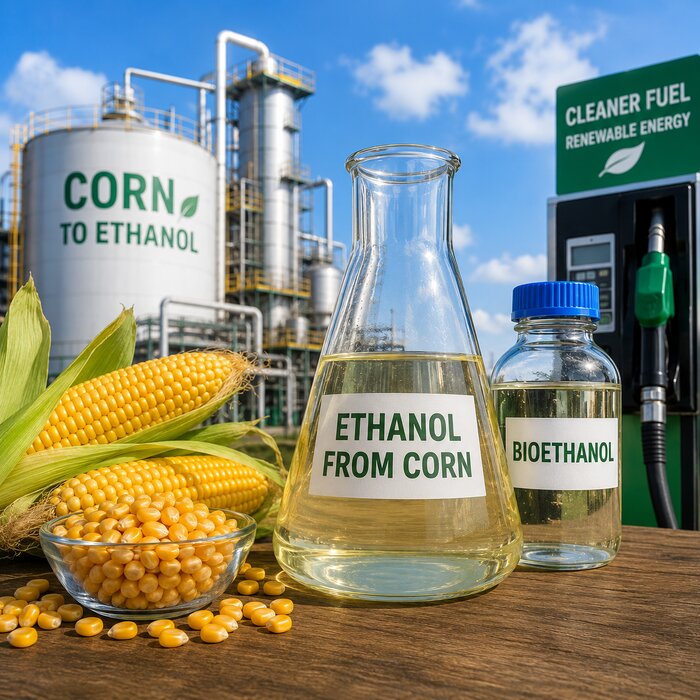
Ethanol fuel producers from U.S. consumed 472 million bushels of corn in May 2026, up 10% from April and 6% higher than the same month last year, reflecting stronger demand for ethanol production, the USDA said.
Total corn consumed for alcohol and other uses reached 524 million bushels during the month, an increase of 9% from April and 5% year-on-year. Of the total corn processed, 92% was used for alcohol production, while the remaining 8% went to other industrial uses, Ethanol Producer Magazine reported.

The USDA said dry mills accounted for 92% of the corn used in fuel ethanol production, while wet mills contributed the remaining 8%.
Among ethanol co-products, condensed distillers solubles production at dry mills rose to 125,806 tonnes in May, up 6% from April and 2% higher than a year earlier. Corn oil production increased to 206,343 tonnes, gaining 9% month-on-month and 6% from May 2025.
Production of distillers dried grains with solubles (DDGS), a key livestock feed ingredient, reached 1.77 million metric tonnes, up 11% from April but marginally lower than the previous year. Distillers wet grains production rose nearly 6% from April to 1.37 million tonnes and was 12% higher than May 2025, while modified distillers grains output declined 6% month-on-month to 443,978 tonnes, although it remained slightly above year-ago levels.
At wet mills, corn germ meal production declined 3% from April to 53,118 tonnes and was 2% lower than a year earlier. Corn gluten feed output increased 20% month-on-month to 292,461 tonnes and was up 10% year-on-year. Corn gluten meal production rose 10% from April to 106,960 tonnes but was 3% below May 2025 levels. Wet corn gluten feed production edged up nearly 1% from the previous month to 190,178 tonnes but declined 5% from a year ago.
The USDA also reported that carbon dioxide captured at dry and wet milling facilities totalled 251,627 tonnes in May, up 4% from April but 3% lower than the same month last year.














