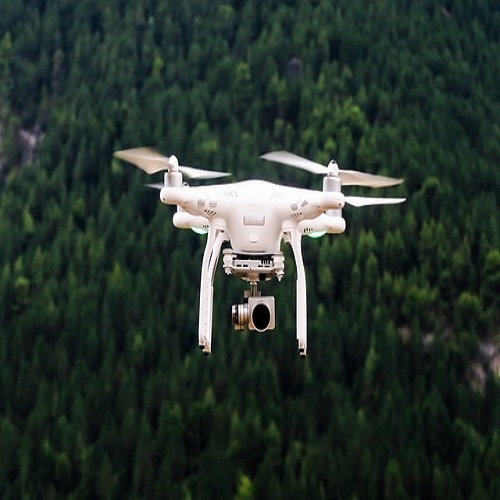
Saharanpur: Researchers at the Indian Institute of Information Technology (IIIT) have developed a drone-based precision farming technology that could help sugarcane farmers increase yields, reduce input costs and improve profitability amid growing challenges from climate change and rising cultivation expenses.
The technology uses a dual-drone system that assesses crop requirements and applies water and fertilizers based on field-specific needs. Researchers say the approach can significantly reduce water and nitrogen consumption while increasing sugarcane productivity and farm income, Amar Ujala reported.

The findings have been published in the journal Discover Agriculture
The study was conducted on the Co-0238 sugarcane variety in Nanota block of Uttar Pradesh’s Saharanpur district. The technology was developed by researchers Dr. Pritish Kumar Vardwaj, Dr. Vineet Tiwari and Shefali Vinod Ramteke.
The system employs two separate drones. The first drone uses a multispectral camera to capture images and monitor crop health, assessing nutrient and moisture levels across the field. Based on this analysis, a second drone applies fertilizers and other agricultural inputs precisely where they are needed.
Researchers compared three cultivation approaches during the study. The first involved conventional flood irrigation with 250 kilograms of nitrogen per hectare. The second used drone-guided sensor-based fertigation, while the third incorporated a seaweed-based biostimulant treatment.
Results showed substantial savings in both water and fertilizer use. Irrigation water consumption declined from 8,900 cubic metres per hectare under conventional practices to 6,200 cubic metres per hectare under the sensor-based system, representing a reduction of nearly 30 percent.
Nitrogen application fell from 250 kilograms to 190 kilograms per hectare, a decrease of about 24 percent. At the same time, nitrogen use efficiency improved from 31 percent to 48 percent. Drone monitoring also revealed that nearly 70 percent of the field required lower nitrogen application than traditionally applied.
The precision agriculture system also delivered significant gains in crop productivity. Sugarcane yield increased from 78.2 tonnes per hectare to 91.3 tonnes per hectare, representing a 16.8 percent improvement.
Higher productivity and reduced input costs translated into stronger farm returns. Net profit increased from ₹52,000 per hectare under conventional practices to ₹81,200 per hectare with the drone-based approach.
Researchers believe the technology could offer a practical solution for sugarcane growers seeking to improve resource efficiency, lower production costs and enhance profitability while addressing environmental challenges linked to water and fertilizer use.