Mumbai: India’s sugar and bioenergy sector must move beyond conventional ethanol production and accelerate the transition towards a broader bioeconomy built on waste valorisation, advanced technologies and diversified bio-based products, industry experts said during a panel discussion titled “The Bioeconomy Blueprint” at the Sugar Ethanol Bioenergy India Conference (SEIC) 2026.
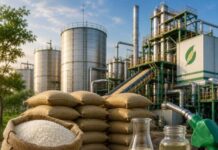
The discussion explored emerging opportunities across the biorefinery value chain, including sugar industry waste valorisation, press mud to Bio-CNG and compressed biogas (CBG) pathways, Zero Liquid Discharge technologies, low carbon intensity ethanol from lignocellulosic biomass, by-product valorisation, bagasse upgrading, bio-fertilisers, soil health products and bio-hydrogen pathways.

The session was moderated by Dr. SSV Ramakumar, Chief Technology Officer, AM Green.
Opening the discussion, Dr. Ramakumar said India’s ethanol industry is entering a new phase where diversification and market expansion will become essential.
He observed that even after achieving national ethanol blending targets, India could emerge as an ethanol-surplus country and therefore should actively develop new markets and product streams.
Calling for a broader vision, he encouraged the industry to move beyond conventional thinking and explore opportunities across the bioeconomy.
“Look beyond as the sky is the limit,” he said, while highlighting the untapped value of bagasse as a rich biological resource.
Speaking on the growth trajectory of the sector, Dr. Sanjukta Subudhi, Associate Director, The Energy and Resources Institute (TERI), said India’s bioethanol ecosystem has expanded rapidly over the last few years.
“We have seen sixteen-fold growth in the bioethanol sector in the last few years,” she said.
Subudhi explained that ethanol production relies on biological processes and the same scientific foundation can be leveraged to produce higher-value products.
“Ethanol is produced by microorganisms. This process can be diverted towards producing high-value chemicals, which will be beneficial for the sector,” she said.
She emphasised the need for diversification and called for expanding the portfolio of bio-based molecules and products.
According to Subudhi, collaboration between industry and academia will be essential to unlocking the next phase of growth.
“Using the same set of infrastructure, we can diversify production and expand the bioeconomy basket,” she said.
Sharing an industry perspective, Surendra Singh, Business Leader, BIG Group, said carbon dioxide generated during ethanol production should be viewed as a resource rather than waste.
“CO2 produced from ethanol production is not waste,” Singh said.
He added that the ethanol industry has matured significantly and now has opportunities to generate additional value through industrial integration.
“CO2 is not a low-value product,” he said.
Singh noted that synchronisation between ethanol producers and industries consuming carbon dioxide remains a challenge but said efforts are underway to expand sectors with higher CO2 demand.
He pointed to fertiliser manufacturing as one of the industries that could absorb larger quantities of captured carbon dioxide.
According to Singh, connecting suppliers and industries that procure CO2 remains an important area for future development.
Speaking on technology-led decarbonisation, Snehalkumar Suryawanshi, Head of Cleantech for India, Alfa Laval, said clean industrial technologies can help improve environmental performance and accelerate circular manufacturing.
“We offer clean technologies. If we manage Zero Liquid Discharge from industries, it will help in reducing carbon footprints,” he said.
Suryawanshi added that currently available technologies can also support affordable production of second-generation (2G) ethanol.
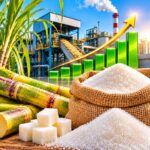
The discussion reflected a growing consensus that the future of India’s sugar and bioenergy industry will depend not only on ethanol production but also on converting by-products into higher-value products, reducing waste and creating a more integrated and sustainable bioeconomy ecosystem.
To watch full discussion click here