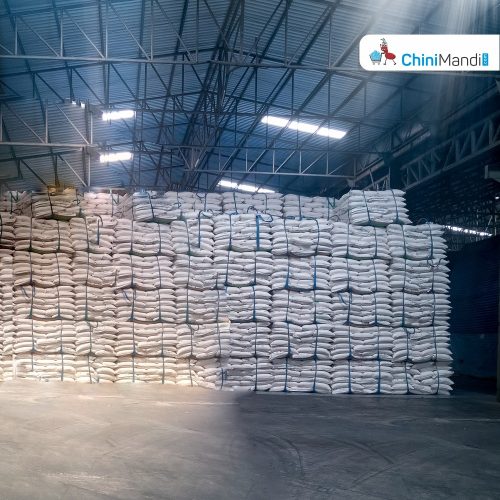
The Centre is stepping up checks on sugar stocks as domestic prices rise sharply, with 10 central government teams set to visit states to physically verify stocks and investigate possible hoarding and profiteering, Zee Business reported.
The move follows concerns raised by the government that speculation, hoarding and attempts to create an artificial shortage may have contributed to the recent rise in sugar prices. States have also been asked to speed up action against businesses found holding back sugar or selling it at higher prices.

The government’s latest assessment suggests that some sugar mills could be showing sugar as sold in their records while still holding the stocks physically. Authorities are therefore increasing checks to compare reported inventories with actual stocks.
The government has described the recent price rise as a “man-made crisis” and said it is examining whether sugar is being deliberately kept out of the market.
Sugar prices have risen sharply in recent weeks. The government earlier said the average price increased from Rs 48.18 per kg on July 20 to Rs 55.70 per kg on August 20.
It has attributed the increase to several factors, including lower-than-expected production, higher demand during the festive season, crop damage caused by weather conditions and tighter global supplies. At the same time, it has specifically raised concerns about speculation and hoarding by some industry players.
The Centre has rejected claims that ethanol production is responsible for the price increase. It said the share of sugarcane diverted for ethanol production has fallen from about 12% in 2022-23 to around 9% in 2025-26.
Stock verification intensified
The Centre and state governments are already conducting physical checks of sugar stocks at mills. The deployment of 10 central teams is expected to expand these inspections.
The teams will check whether stocks reported by mills match their actual inventories and look for cases where sugar may have been withheld from the market to create a shortage.
States have been directed to speed up enforcement and take action against businesses found to be hoarding sugar or making excessive profits.
The government has already capped stocks held by sugar dealers at 400 tonnes from August 1 to November 30, 2026. From September 1, bulk consumers will also be barred from holding more than 15 days of their consumption.
Supply expected to improve from September
Despite lower-than-expected production, the government has said sugar stocks are sufficient to meet domestic demand until the new crushing season begins in October.
Around 35 lakh tonnes of sugar is expected to be available in September, which could ease supply concerns.
The Centre has also asked sugar mills and states to start crushing early from October 15. Early crushing could result in more than 10 lakh tonnes of sugar production in October, compared with the usual 3-4 lakh tonnes.
The additional output is expected to improve sugar availability during the festive season.
Duty-free imports to boost supplies
The Centre has also allowed duty-free imports of 10 lakh tonnes of raw sugar to increase domestic supplies as a precautionary measure.
The imported sugar is expected to arrive by October 15, adding to supplies before the festive season.
The government has estimated current-season sugar production at around 306 lakh tonnes, well below the earlier estimate of about 343 lakh tonnes made by sugarcane-growing states.
Production has been affected by diseases including Red Rot and Top Borer, as well as waterlogging caused by heavy rainfall.
Global sugar supplies have also tightened. The government estimates a global deficit of around 33 lakh tonnes in 2026-27, while international sugar prices increased from $474 per tonne on June 30 to $552 per tonne on August 20.
The government, however, has maintained that domestic sugar supplies are sufficient and warned that action will be taken against practices that create an artificial shortage.
With physical stock checks being expanded and central teams preparing to visit states, sugar mills, dealers and traders could face closer scrutiny in the coming week over suspected hoarding and profiteering.