Demand for freshly made jaggery has picked up in Mahottari district of Nepal ahead of the Chhath festival, bringing renewed activity to traditional sugarcane-processing units as farmers and producers work to meet the seasonal demand, The Rising Nepal reported.
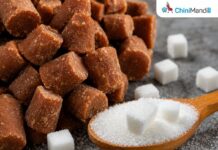
Jaggery, locally known as sakkhar, is an important ingredient in several offerings prepared during Chhath, particularly thekuwa and bhuswa. It is also used to make sel roti, a traditional delicacy prepared in many households during Tihar, adding to its demand during this period.

On Kharna, the second day of Chhath, devotees break their day-long fast with rice pudding prepared using jaggery. The pudding is offered along with rice bread, bananas, radishes and other food items before being consumed as prasad. The evening arghya, or offering to the setting sun, will be observed on November 15 this year.
Surendra Sah, a jaggery producer from Ward No. 4 of Gaushala Municipality, said the production process begins with crushing sugarcane in traditional mills to extract juice. The juice is boiled in large iron pans until it thickens sufficiently to solidify into jaggery.
He said the work involves considerable labour and that the khutti variety of sugarcane is considered suitable for jaggery production. Around eight to 10 quintals of sugarcane are needed to make one quintal of jaggery, he added.
Sugarcane can be harvested twice from a single planting. The first-year crop is known as mudan, while the second-year crop is called khutti. Producers are particularly busy during Chhath, as consumers prefer freshly prepared jaggery over older stock.
However, the number of traditional jaggery producers in Mahottari has declined over the years. Sah recalled that nearly every village in the district’s western and northern areas once had jaggery-making units, but the labour-intensive nature of the business has led many to move away from it.
Sugarcane-crushing equipment is now available in only a few locations, including Gaushala, Bardibas, Bhangaha, Aurahi and Sonama.
Birendra Yadav, a farmer from Ward No. 2 of Sonama Rural Municipality, attributed the decline partly to a shift in marketing practices, with most sugarcane growers now selling their produce to the sugar factory in Ramnagar, Mahottari, rather than processing it into jaggery.
Shyam Kishor Mahara, another jaggery producer, said prices generally range between Rs. 100 and Rs. 120 per kg but tend to rise during Chhath as demand increases, improving returns for producers.