
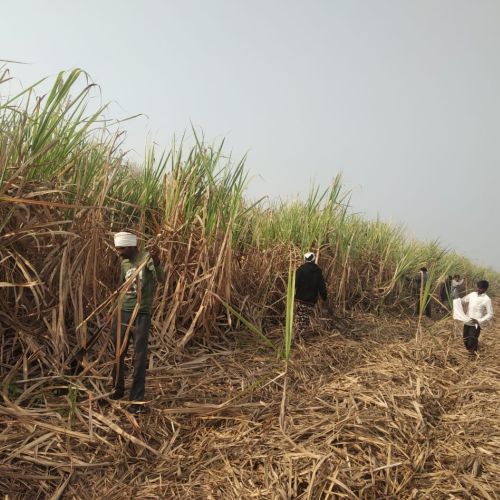
Dharashiv district in Maharashtra, historically associated with drought and water scarcity, has recorded a landmark sugarcane crushing performance in the 2024-25 season, emerging as the top-producing district in the Marathwada region despite receiving only 604 mm of average rainfall, Lokmat reported.
The district crushed 62 lakh 11 thousand 770 metric tonnes of sugarcane during the season, with 14 cooperative and private sugar factories together driving the output. The achievement has been widely described as a sugar revolution for a region long considered unsuitable for large-scale cane cultivation.

Sugarcane cultivation in Dharashiv has expanded roughly two and a half times over the past seven years, aided by gradual improvements in rainfall patterns and a significant strengthening of irrigation infrastructure. This expansion has also led to an increase in both the number of sugar factories and their combined crushing capacity across the district.
Latur district ranked second in Marathwada with a crushing volume of 55 lakh 31 thousand 250 metric tonnes. Other districts including Beed, Jalna, Parbhani, Chhatrapati Sambhajinagar, Nanded, and Hingoli also recorded substantial crushing figures during the season.
Across Marathwada as a whole, sugar factories crushed approximately 2 crore 99 lakh 60 thousand 159 metric tonnes of sugarcane in 2024-25, yielding 2 crore 61 lakh 33 thousand 360 quintals of sugar.
Productivity growth in Dharashiv has been equally notable. The district’s average cane yield rose from 51 metric tonnes per hectare in 2018-19 to 67 metric tonnes per hectare in 2024-25. In Tuljapur taluka, select farmers using artificial intelligence-based farm management tools have pushed productivity to as high as 120 metric tonnes per hectare, according to the report.
The broader improvement has been reported due to the widespread adoption of drip irrigation, improved cane varieties, soil testing, and systematic water management practices. These methods have made sugarcane cultivation viable even in low-rainfall areas and have driven consistent year-on-year output gains across the district.















