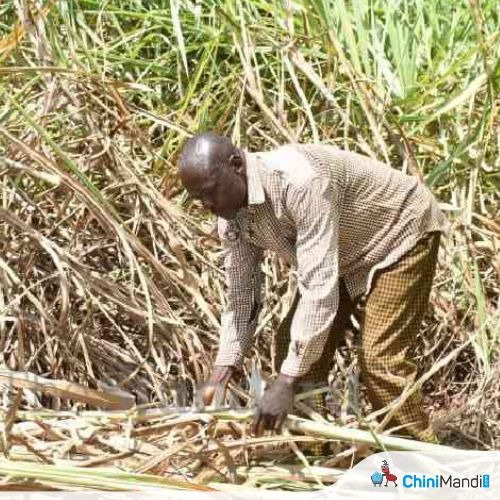
Around 40 sugarcane farm leases in Fiji’s Northern Division have not been renewed, leaving farming families in Seaqaqa and Labasa with no stable source of income and deepening concerns about the long-term health of the country’s sugar industry, fijivillage News reported.
Minister for Agriculture Tomasi Tunabuna confirmed that while the government has facilitated the renewal of 850 leases, the non-renewals in the north are already affecting the volume of cane being sent to the mill. He said the declines are contributing to lower yields than the targets set under projected industry growth calculations, and that the ministry is also examining ways to address the effects of climate change on farm output.
The iTaukei Land Trust Board (TLTB) said that of 602 cane leases due to expire between 2025 and 2035, 440, or 75 per cent, have been renewed, including 140 early renewals and eight with reduced areas. Thirty-two leases reverted to landowners for their own use, eight are to be subdivided for higher-return purposes such as residential or commercial development, and 116 remain under review. TLTB said parts of cane farming land in Seaqaqa have been subdivided into residential and commercial lots to generate better returns for landowners, and that overall lease renewal across the industry stands at around 85 per cent.

The human cost of the non-renewals is significant. Natuvu farmer Girja Nand, 43, who has worked the land for 29 years after taking over from his 80-year-old father who farmed the same plot for five decades, said his lease expired on January 1 this year. He previously harvested up to 400 tonnes of sugarcane, six tonnes of rice, and various vegetables. After two unsuccessful applications for 15 acres of land, he applied for a residential block quoted at between $18,000 and $23,000. Despite paying $5,000 in instalments, his file was closed due to incomplete payment, and he now fears the money is lost. He survives on occasional carpentry work and is concerned about providing for his son, who is in Year 10, and his elderly father.
Mohammed Rafiq, 50, from the same area, said he once harvested more than 5,000 tonnes of cane and earned over $12,000 per season. After his land was returned to the mataqali following non-renewal, he has turned to livestock farming. He said TLTB has asked him to apply for a house block at a cost of over $30,000, with a separate $30,000 required for any cane farm allocation. In Vunivere, Hirday Narayan, 50, a second-generation farmer who has worked his land for 30 years, warned that this could be the last generation involved in sugarcane farming in the region. He said the area once produced around 10,000 tonnes of cane and that approximately 25 farmers in Vunivere are now uncertain about their lease status. In Daku, Labasa, 80-year-old cancer survivor Daya Wati said her lease was not renewed last year. She had previously harvested around 150 tonnes of cane and now relies on livestock sales and social welfare to survive, while remaining uncertain about how long she can stay on the land.
Opposition Leader Inia Seruiratu said these farmers are not idle occupants but the very people who cultivate the land, sustain supply chains, and support livelihoods across rural communities. He raised particular concern over reports that some farmers are being asked to pay premiums of between $30,000 and $50,000 as a condition for lease renewal, sums he said were beyond the reach of ordinary farming families. Seruiratu called for urgent government intervention and better coordination between the administration, TLTB, and landowners to ensure that renewals are handled fairly and transparently. He warned that allowing leases to lapse without viable renewal pathways, or imposing prohibitive financial conditions, undermines both economic stability and social cohesion in Vanua Levu.
Unity Fiji leader Savenaca Narube said the sugar industry has been in decline for decades and that land issues, particularly productivity and land use, are a significant factor. He said the broader question of why leases are not being renewed and what challenges are driving this needs to be addressed.
Tui Labasa Ratu Jone Qomate, speaking on behalf of the Macuata Province, said landowners with sitting tenants should not remove them without cause and should not take over land only to leave it idle. He said he did not want a repeat of 2003, when a large number of leases were similarly not renewed, and stressed that tenants must also remain productive.
TLTB said that where leases are not renewed, it offers tenants a 99-year residential lease for their house site, subject to payment of a premium and rent. It also noted that tenants are entitled to claim compensation under the Agricultural Landlord and Tenant Act (ALTA). The Board said the biggest challenges currently facing the cane sector are the low yield rate of 40 to 60 tonnes per hectare on farms and the fact that around 30 per cent of farms are nonproductive or idle. It called for authorities to expedite the review of the ALTA Unimproved Capital Value (UCV), noting that the last such review was conducted in 2011 and that two successive five-year reviews, due in 2016 and 2021, were missed, leaving landowners deprived of rent reflecting current land values. The Ministry of iTaukei Affairs and TLTB had not responded to all questions from fijivillage News at the time of reporting.