
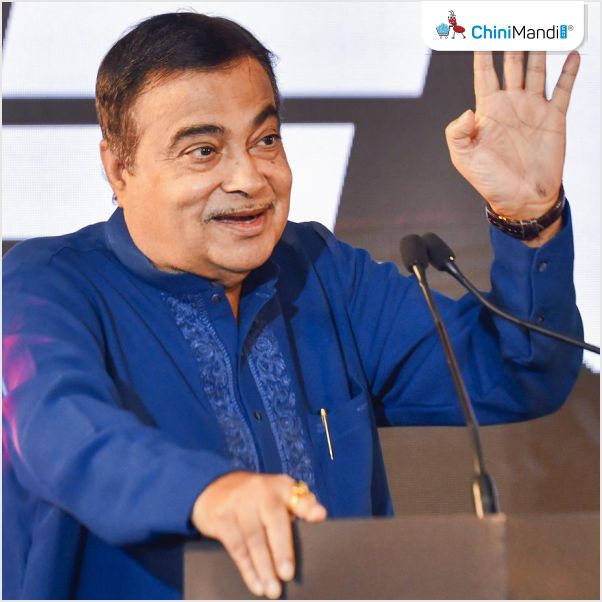
Union Minister for Road Transport and Highways Nitin Gadkari on Tuesday declared that fossil fuels have no place in India’s public transport future, calling on vehicle manufacturers and fleet operators to urgently accelerate the shift to cleaner alternatives, Economic Times Auto reported.
Speaking at the Busworld India 2026 summit, Gadkari said India’s heavy dependence on crude oil imports made the country economically vulnerable, particularly in times of global geopolitical disruption. “There is no future for diesel and petrol vehicles…If you are not going to change, then be cautious. There is no good future for petrol and diesel,” he said, addressing original equipment manufacturers (OEMs) directly.

The minister pointed to hydrogen, ethanol, compressed natural gas (CNG), liquefied natural gas (LNG), and electric powertrains as the fuels that must replace fossil fuels across the transport sector. He said the ministry had already launched pilot hydrogen mobility projects, with Tata Motors, Volvo, Ashok Leyland, and Mahindra & Mahindra participating in hydrogen truck and bus trials. “We are now on the 10 routes where we are running hydrogen trucks and hydrogen buses. Hydrogen is the fuel for the future,” Gadkari said.
On ethanol, the minister highlighted India’s growing capacity to produce the fuel from multiple feedstocks and noted that the transition to flex-fuel engines was now underway. “Now we are adding 20 per cent ethanol in petrol. But now we are in the process of making flex engines,” he said.
Beyond the fuel transition, Gadkari also outlined the government’s plans to tighten safety standards in the bus sector. Bus registrations will now require approvals in both physical and video formats, to be uploaded on the government’s VAHAN portal, replacing the earlier self-certification system for bus manufacturers. “Without physical and video inspection…buses will not get registered,” he said. To ease the compliance burden on smaller bus body manufacturers, the ministry has also proposed to cut testing charges at the Automotive Research Association of India (ARAI) by nearly 50 per cent and to speed up certification timelines.
On capacity, Gadkari urged manufacturers to focus on quality and passenger comfort rather than cost alone. Demand for electric buses is expected to reach 1.5 lakh units over the next three years, yet annual manufacturing capacity currently stands at around 70,000 buses. The minister called on the industry to expand capacity by at least three times to meet projected demand. “You should be quality-centric, not cost-centric,” he said.
India currently has only two buses per 1,000 people against a global benchmark of eight, reflecting a significant gap in public transport availability. Gadkari also called for a rethink of bus design to better accommodate passengers with disabilities and the elderly. “You have to think about the Divyang people, senior citizens…all city buses need to have a hydraulic kneeling system,” he said.















