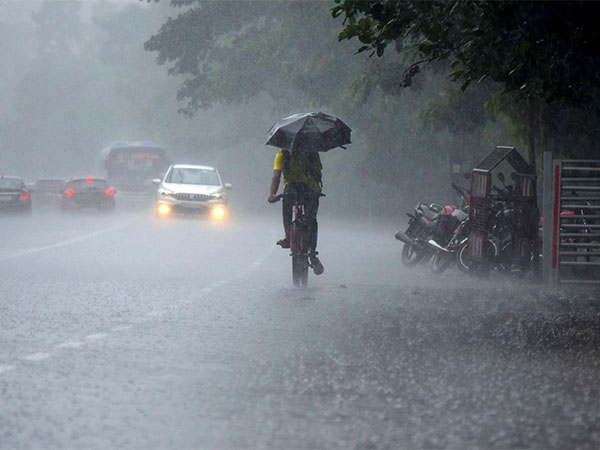
LONAVALA, Maharashtra: Lonavala, one of Maharashtra’s most popular hill stations, received a record 1,290 mm of rainfall in 48 hours, triggering landslides and disrupting road and rail connectivity between Mumbai and Pune.
The hill town in Pune district recorded 670 mm of rain on July 5, followed by another 620 mm on July 6, according to rainfall data. Based on the India Meteorological Department (IMD) and Central Water Commission’s Rainfall Frequency Atlas (2015), the July 5 rainfall is classified as a one-in-1,000-year event, while the July 6 rainfall is considered a one-in-500-year event, Deccan Herald reported.

The heavy rainfall caused a series of landslides, disrupting traffic on the Mumbai-Pune Expressway, the old Mumbai-Pune National Highway (NH-48), and the Mumbai-Pune railway line.
Weather experts described the rainfall as one of the most extreme monsoon events recorded in the region.
S.R. Khandelwal of Mumbai Nowcast said Lonavala had “created history” by receiving 1,290 mm of rain in two days. Former IMD Pune scientist K.S. Hosalikar said the 670 mm rainfall matched the intensity of a 1,000-year rainfall event.
Research scientist Dr Vineet Kumar said rainfall exceeding 650 mm in a day is expected only once in about 1,000 years in Lonavala. Climate scientist Dr Vivek Shilimkar said rainfall above 620 mm is associated with a 500-year return period, while rainfall exceeding 670 mm is considered a 1,000-year event.
Abhijit Modak of Konkan Hawaman said the 670 mm rainfall set a new all-time 24-hour rainfall record for the Bhor Ghat region. IMD scientist Sakha Sanap said nearby Davdi received 688 mm of rainfall on July 6, while Lonavala recorded 620 mm. He added that rainfall intensity is likely to decrease over the coming days.
Located in the Western Ghats, a UNESCO World Heritage Site, Lonavala and neighbouring Khandala are among Maharashtra’s busiest tourist destinations during the monsoon. The region is known for its forests, biodiversity and attractions such as Lohagad Fort, Bhushi Dam, Tiger’s Leap, Rajmachi Fort, Pavana Lake, Karla and Bhaja Caves, and its famous chikki made from jaggery, groundnuts and ghee.