
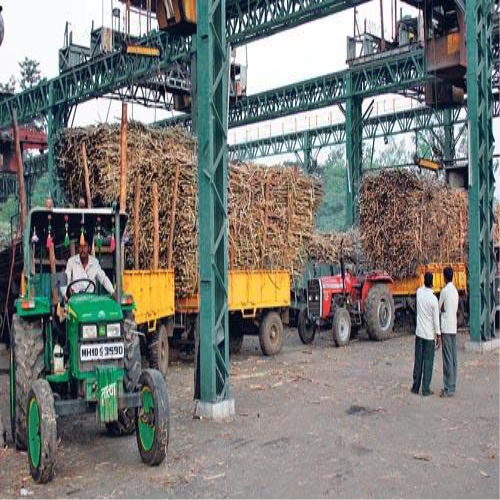
Kolhapur: The proposed early start to Maharashtra’s sugarcane crushing season has triggered concerns among sugar mills and farmer organisations over possible financial losses to both sides. With the Centre considering October 15 as the start of the crushing season to improve sugar availability and contain retail prices, industry representatives and farmer leaders have warned that crushing before November could result in lower sugar recovery and reduced cane weight.
Speaking to ChiniMandi, stakeholders said the combined impact could cause losses of around Rs 700 to Rs 900 per tonne. The availability of cane-cutting labour is another major concern if the season begins earlier than usual.

The key question now is whether the government will compensate farmers and mills for the potential losses arising from an early start and what measures it plans to introduce.
A meeting to take a final decision on the start of Maharashtra’s crushing season is scheduled at Mantralaya on Wednesday under Chief Minister Devendra Fadnavis. The two Deputy Chief Ministers, ministers from the agriculture and cooperation departments, other concerned ministers and representatives of sugar industry associations are expected to attend.
Farmers may lose Rs 700 per tonne: Raju Shetti
Swabhimani Shetkari Sanghatana leader and former MP Raju Shetti said early crushing could reduce sugar recovery by around 1 to 1.5 percentage points. At current sugar prices, this could translate into a loss of approximately Rs 700 per tonne for farmers.
He also warned that lower recovery could affect the calculation of Fair and Remunerative Price (FRP) in the following season. If the government can consider duty-free sugar imports to control prices, it should also provide financial assistance to farmers who bear losses by supplying cane early, Shetti said.
He suggested that the Centre and Maharashtra government should jointly bear the financial burden. According to Shetti, early crushing could also reduce overall sugar production and potentially lead to another shortage after a few months.
Instead of starting crushing early, the government should work to bring into the market the millions of tonnes of sugar allegedly produced by mills by showing lower recovery, he said.
Indefinite protest from September 29
Shetti also said lakhs of sugarcane farmers from Maharashtra and Karnataka would stage an indefinite sit-in outside Union Food and Consumer Affairs Minister Pralhad Joshi’s residence in Hubballi from September 29.
The farmers are demanding that the minimum support price for sugar be raised to Rs 50 per kg, or Rs 5,000 per quintal, and that the ethanol price be fixed at Rs 70 per litre, with the benefits reaching sugarcane farmers.
He urged the Centre to convene an urgent joint meeting involving the chief ministers of Maharashtra and Karnataka and farmer organisations before the September 29 protest.
Shetti warned that sugar mills in both states would not be allowed to start crushing until a satisfactory solution is reached on cane prices.
Mills could lose Rs 450-500 per tonne: B.B. Thombre
WISMA president B.B. Thombre said starting crushing in October could result in a 1 to 1.5 percentage point decline in sugar recovery because the cane would not have reached full maturity.
This could cause mills to lose around Rs 450 to Rs 500 per tonne. Farmers, meanwhile, could suffer a further loss because insufficient cane growth could reduce cane weight by 10 to 12 per cent, resulting in an estimated loss of Rs 300 to Rs 350 per tonne.
Thombre said the government should provide a subsidy of Rs 450-500 per tonne to mills and Rs 300-350 per tonne to farmers if it decides to begin crushing early.
“We have presented our position to the Centre and the state government. The government should take a decision after consulting all stakeholders,” he said.
State will implement government decision: Sugar Commissioner
Sugar Commissioner Dr Sanjay Kolte said the licensing process for the upcoming crushing season has already begun. Sugar mills are required to submit online applications between September 1 and September 30 to obtain crushing licences.
Mills must have paid 100 per cent of the FRP dues from the previous season to qualify for a licence. Mills that fail to apply within the stipulated period, start crushing without a licence or violate licence conditions will face action under the applicable rules, he said.
Kolte added that his office would strictly implement whatever decision the state government takes regarding the start of the crushing season.
32 mills still owe Rs 201 crore in FRP
Meanwhile, the issue of pending cane payments remains unresolved as preparations begin for the new season. A total of 210 sugar mills participated in Maharashtra’s previous crushing season, but seven months after the mills closed, farmers are still awaiting payments from some units.
As of August 31, 2026, 32 sugar mills had outstanding FRP dues amounting to Rs 201 crore to sugarcane farmers.
The Sugar Commissionerate has initiated Revenue Recovery Certificate (RRC) proceedings against 15 mills for failing to clear FRP dues. The Commissionerate has also made it clear that mills with outstanding FRP payments will not be granted crushing licences.















