
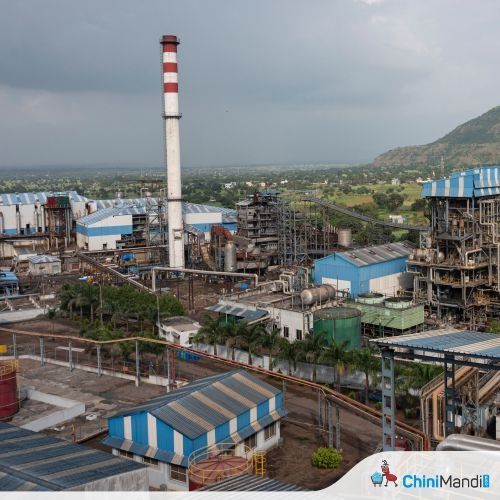
The Union government has proposed a major change in the sugar sector through the draft Sugarcane (Control) Order, 2026, including a plan to increase the minimum distance between two sugar mills from 15 km to 25 km. The move is expected to impact key sugar-producing states such as Uttar Pradesh and Karnataka.
The distance, known as the command area, is aimed at ensuring that mills procure sugarcane only from their designated zones and do not compete for the same farmers’ produce. The proposal has been under discussion for years, with industry players seeking changes to reflect shifting cropping patterns. States like Maharashtra, Punjab and Haryana already follow the 25-km norm.

The draft Sugarcane (Control) Order, 2026 was published by the Union Food Ministry on Tuesday, with public feedback invited until May 20, 2026. It states that no new sugar factory will be allowed within a 25-km radius of an existing or proposed mill across states. However, state governments may, with prior approval from the Centre, set a higher minimum distance or prescribe different distances—so long as they are not below 25 km—for specific regions in public interest.
Alongside this, the draft brings ethanol production within the formal regulatory framework of the sugar sector. Units producing ethanol from molasses, a byproduct of sugar, will now be treated as part of the industry. This comes as India pushes its E20 blending programme, which involves mixing ethanol with petrol. Under the proposal, 600 litres of ethanol will be treated as equivalent to one tonne of sugar while calculating total output.
Industry response has been largely positive. Deepak Ballani, director-general of the Indian Sugar & Bio-energy Manufacturers’ Association (ISMA) told Hindustan Times that the proposals are still being studied but welcomed steps such as increasing the distance between mills and bringing smaller khandsari units under regulation.
The draft does not propose any change to the existing sugarcane pricing system. Mills will continue to pay the fair and remunerative price fixed by the Centre, currently Rs 355 per quintal, ensuring steady income for nearly 50 million farmers.
It also seeks to give more powers to states, including the authority to approve expansion of mill capacity, which currently requires central clearance. At the same time, safeguards for farmers remain unchanged, including a 14-day payment deadline and a 15% interest penalty on delayed dues.
The overhaul is being seen as the most significant reform in the sector since 2012, when recommendations by C. Rangarajan led to the removal of the levy sugar system, under which mills had to sell part of their output to the government at lower prices for the public distribution system.
In addition, the draft proposes stricter norms for setting up new factories, tighter enforcement of distance rules, and an increase in the performance bank guarantee to Rs 2 crore, to be overseen by an independent authority. It also aligns enforcement provisions with the Bharatiya Nagarik Suraksha Sanhita.















