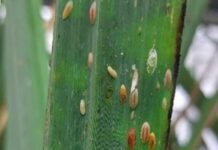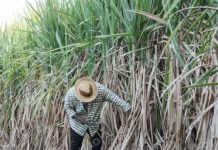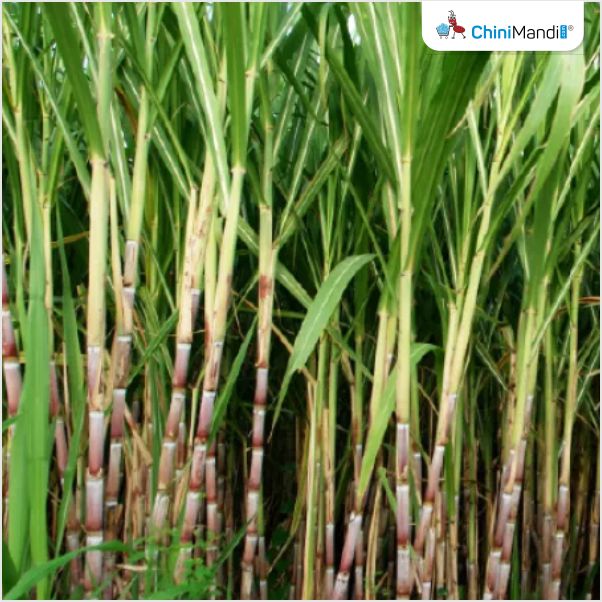
Bacolod City: The Philippines has intensified efforts to contain the rapid spread of red-striped soft scale insect (RSSI) across major sugar-producing regions, as government agencies, industry leaders and local authorities prepare to coordinate a stronger response to protect the country’s sugar sector.
The move follows growing concern over the expanding infestation, which is affecting thousands of farmers and raising fears of further production losses in one of the country’s most important agricultural industries, Panay News reported.

During the recent 40th anniversary celebration of the Sugar Regulatory Administration (SRA), Agriculture Secretary Francisco P. Tiu Laurel Jr. directed the agency to accelerate production of biological control agents using naturally occurring fungi to suppress the pest before it spreads further across sugarcane plantations.
The agriculture chief said the government aims to produce sufficient biological control material to cover at least 75,000 hectares of sugarcane nationwide and pledged additional funding to strengthen mitigation efforts.
Support measures will include expanded production of biocontrol fungi, development of artificial intelligence-based tools for early pest detection and increased use of laboratory facilities under the Bureau of Plant Industry and other Department of Agriculture units.
The intensified response comes as SRA monitoring data dated June 11 showed that RSSI has entered a phase of accelerated spread across the Visayas region.
According to the report, a total of 4,847.63 hectares of sugarcane plantations across five provinces have been affected, impacting 2,587 farmers in 244 barangays.
Southern Negros Occidental remains the most severely affected area, accounting for 2,429.62 hectares across 74 barangays and affecting 1,399 farmers.
Another 1,400.52 hectares have been impacted in central and northern Negros Occidental, while 797.71 hectares have been recorded in Negros Oriental.
The infestation has also expanded beyond Negros, affecting 197.60 hectares in Iloilo, 22.03 hectares in Capiz and reaching Leyte with its first confirmed case covering 0.15 hectare.
The SRA identified Mabinay in Negros Oriental and the Negros Occidental municipalities of Himamaylan and Binalbagan among the major infestation hotspots.
The agency said the emergence of new hotspot areas reflects both the seriousness of the outbreak and expanded monitoring efforts.
In response, the United Sugar Producers Federation (UNIFED) scheduled a high-level meeting on June 23 involving Governor Eugenio Jose Lacson, provincial officials, SRA representatives and the Inter-Agency RSSI Task Force to discuss immediate intervention measures and farmer support.
UNIFED President Manuel Lamata described the situation as increasingly concerning, saying infestation levels have been doubling almost weekly and creating uncertainty for growers, particularly small-scale farmers.
He noted that although RSSI was first detected in local sugar-producing areas last year, the current outbreak appears significantly more severe.
Lamata warned that continued spread could have broader economic consequences for Negros Island, where sugar remains a major source of employment and income.
He also suggested that RSSI may have contributed to lower sugar production in the previous season and cautioned that further damage could occur if stronger action is not taken.
While acknowledging the SRA’s ongoing research and farmer assistance efforts, Lamata said resource and manpower limitations remain a challenge in scaling up biological control measures and validating the full extent of damage.
RSSI, a sap-feeding insect first identified in the Philippines in 2022, can reduce sugar recovery in infected cane by as much as 50 percent and encourages the growth of sooty mould, which interferes with photosynthesis and crop development.
The SRA has allocated approximately P8 million for mitigation activities and continues to lead the Inter-Agency RSSI Task Force established in 2025 to promote science-based and environmentally focused approaches to protect domestic sugar production.