

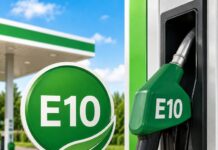
Bengaluru: Union Minister for Food, Public Distribution and Consumer Affairs Prahlad Joshi has defended the Centre’s ethanol blending programme, claiming that all 893 petrol samples tested across 27 States and Union Territories complied with the prescribed ethanol blending range of 19–21%. He also questioned the testing procedures and credibility of Karnataka’s findings, which reportedly detected ethanol content of up to 31% in petrol samples, The Hindu reported.
Amid the controversy over the ethanol content in petrol samples collected in Karnataka, Joshi said on Tuesday, November 10, that all 56 samples tested by Oil Marketing Companies (OMCs) in the State were within the prescribed limits. According to him, these samples recorded ethanol content between 19% and 20%, with an average of 19.30%.

Taking a swipe at Karnataka Food and Civil Supplies and Consumer Affairs Minister Rizwan Arshad, Joshi described his press conference on ethanol blending as an example of prioritising sensationalism over responsible governance.
Refuting Arshad’s claims about ethanol levels of up to 31% in the State’s petrol samples, Joshi raised questions about the testing methodology, calibration procedures, sample dilution and reference samples used by the laboratories. He pointed out that the certificates issued by Karnataka laboratories mentioned only the ethanol percentage measured through Gas Chromatography without providing details of the testing methodology.
The Union Minister also highlighted differences in the density measurements recorded in the samples. He said samples reporting ethanol content of 26–31% had densities ranging from 0.742 to 0.749 g/cc, whereas samples tested by OMCs, which confirmed compliance with E20 standards, recorded higher densities of 0.752–0.760 g/cc.
According to Joshi, petrol containing more than 20% ethanol should have recorded a considerably higher density than E20 petrol. However, the measurements from Karnataka did not reflect this. He further claimed that the laboratories involved in testing the samples were not among the Schedule III laboratories notified in the government gazette. Arshad, however, had clarified on October 9 that the laboratories were accredited by the National Accreditation Board for Testing and Calibration Laboratories (NABL).
Joshi said shortcomings in the sampling process, retention of samples and laboratory certification had raised doubts about the reliability of the reported measurements.
Defending the ethanol blending programme, Joshi referred to the Congress-led UPA government’s earlier position on the initiative. He recalled that former Petroleum Minister Mani Shankar Aiyar had stated in 2005 that the government intended to increase ethanol blending in petrol if adequate supplies became available.
Joshi questioned why the Congress government in Karnataka was now opposing a programme that had been initiated during its tenure at the Centre.
Highlights benefits to sugarcane farmers
Emphasising the programme’s contribution to the sugar industry and farmers, Joshi said the Ethanol Blended Petrol (EBP) programme had facilitated payments of more than Rs 1.66 lakh crore to farmers since 2014–15.
He said the initiative had created an additional market for sugarcane, improved the liquidity of sugar mills and supported timely payments of cane dues. Nearly 97% of the sugarcane dues for the 2025–26 season had been cleared as of August 20, 2026, he added.
Joshi also pointed out that Karnataka accounted for 11.92 lakh metric tonnes of the total 30 lakh metric tonnes of sugar diverted for ethanol production across the country as of August 31, 2026. This represented nearly 40% of the country’s total sugar diversion towards ethanol.
In addition, Karnataka distilleries were allocated 165.89 crore litres of ethanol during the 2025–26 supply year, including 97.54 crore litres produced from sugarcane-based feedstocks, he said.
Questioning the Karnataka government’s position, Joshi asked why the State was seeking higher ethanol allocations for its sugar industry if it considered ethanol blending harmful to farmers.
He further claimed that the ethanol blending programme had helped India save more than Rs 1.97 lakh crore in foreign exchange, replace approximately 316 lakh metric tonnes of crude oil imports and reduce carbon dioxide emissions by around 952 lakh metric tonnes.














Congress Kar Natak is policy.