
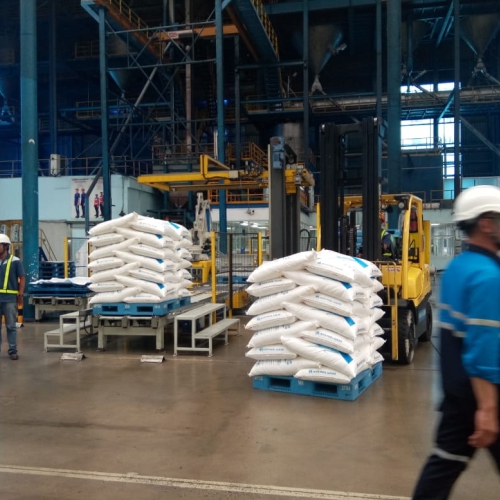
South Africa’s sugar industry has called on the government to urgently update its sugar import tariff mechanism after imports almost doubled during the first five months of 2026, intensifying pressure on domestic producers.
Industry body SA Canegrowers has appealed to Trade, Industry and Competition Minister Parks Tau to expedite changes to the tariff system, arguing that current duties no longer reflect market conditions and are allowing subsidised imports to displace locally produced sugar, Independent Saturday reported.

According to data from the South African Revenue Service (SARS), the country imported 94,984 tonnes of sugar between January and May 2026, compared with 55,213 tonnes during the same period last year. Imports during the corresponding period in 2022 stood at just 1,491 tonnes.
The International Trade Administration Commission (ITAC) has been reviewing the tariff framework following an application submitted by the industry more than 18 months ago.
The rise in imports has coincided with a sharp decline in domestic sugar sales. Data from the South African Sugar Association showed local sugar sales fell to 255,015 tonnes between April and June 2026, down by more than 45,000 tonnes from the same period a year earlier. Monthly sales had previously reached 428,422 tonnes before the tariff mechanism weakened.
SA Canegrowers Chairman Higgins Mdluli said the increase in imports was undermining growers, sugar mills and rural communities.
“Every ton of locally produced sugar displaced by an import is a direct hit to a grower’s income, a mill’s viability and a rural community’s stability,” he said.
The organisation said most imported sugar originates from Brazil, India and Thailand, where government support and integrated ethanol programmes enable producers to export surplus sugar at lower prices.
According to the industry, the increase in imports has not translated into lower retail prices for consumers, while reducing demand for domestically produced sugar.
South Africa’s sugar industry exports surplus sugar that cannot be absorbed by the domestic market, exposing producers to volatile international prices. Industry estimates indicate the value realised from sugarcane has fallen by more than 10% compared with last year, with returns currently around R6,600 per tonne.
Mdluli said delays in updating the dollar-based reference price used in the tariff mechanism were costing the industry hundreds of millions of rand in lost sales.
South Africa’s sugar industry supports more than one million livelihoods, particularly in the rural provinces of KwaZulu-Natal and Mpumalanga, where sugarcane farming is a major source of employment and income. Industry representatives warned that failure to strengthen tariff protection could further weaken the sector.















