
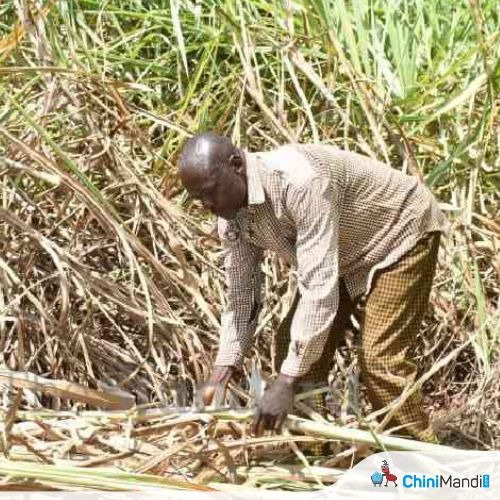
Kampala: The rapid spread of sugarcane cultivation across Uganda’s Busoga sub-region is accelerating deforestation and wetland degradation, with environmental officials and development agencies raising concern about long-term ecological risks even as tree restoration programmes gain ground.
Assessments across the sub-region show that sugarcane farming has pushed into wetlands and forested areas in violation of existing environmental protection laws, exposing communities to increased risks of flooding, drought, soil erosion, biodiversity loss and declining land fertility.

Kamuli District Environment Officer Samuel Bakaki said Wankola Sub-county has experienced extensive vegetation loss as cane cultivation displaces natural forests and wetland ecosystems. He said wildlife habitats and soil systems have been heavily disrupted, with some species becoming increasingly scarce due to large-scale land clearing for monoculture sugarcane.
Kaliro District Natural Resources Officer Paul Diogo said farmers were prioritising short-term income from sugarcane over long-term environmental sustainability, adding that wetlands were being encroached upon by growers with limited access to upland plots. He noted that enforcement was repeatedly undermined when evicted farmers returned to replant sugarcane, particularly during politically sensitive periods. “We must choose between short-term gains from sugarcane and long-term environmental sustainability,” Diogo said.
In Mayuge District, Senior Environment Officer Thomas Aram said rising demand from sugar factories had intensified vegetation clearance, noting that sugarcane — unlike perennial crops such as coffee or bananas — requires fully open land and cannot be grown under tree cover. He said encroachment on wetlands and forest reserves had contributed to flooding, erosion and siltation of water bodies including Lake Victoria. Buyende District Natural Resources Officer John Paul Mweene added that chemical use in sugarcane farming was increasingly contaminating water sources and threatening both human and animal health, while land clearance for the crop was also raising carbon emissions and reducing available grazing land.
To address the deterioration, authorities are promoting wetland restoration, tree planting, agroforestry and alternative livelihoods including livestock farming. One Acre Fund Uganda has launched an agroforestry programme targeting more than 70,000 smallholder farmers across Busoga and other regions, distributing over 2.8 million seedlings- including Grevillea, Albizia coriaria and Faidherbia albida for soil restoration and boundary planting, alongside macadamia trees as a commercial crop.
Daisy Atukunda, Head of Government Relations and Partnerships at One Acre Fund Uganda, said the initiative was designed to integrate trees within existing farming systems rather than replace crops. She said trees offer long-term benefits including improved soil health, timber, firewood and additional income streams. One Acre Fund Country Director Marjolein Bommerez said farmer demand for agroforestry was increasing despite logistical challenges, with many growers now recognising that trees strengthen rather than compete with their farming systems.
Sugarcane growers, however, maintained that the crop is not inherently destructive if managed responsibly. Godfrey Biriwali, Chairperson of the Greater Busoga Sugarcane Growers Union (BBSGU), said large-scale farmers were being encouraged to integrate trees within plantations, drawing comparisons to practices in Mauritius and India. He advised farmers with small landholdings – around one acre – to consider alternative crops such as cassava or millet rather than sugarcane.
Busoga remains central to Uganda’s sugar industry. A 2021 study by the Economic Policy Research Centre found the sub-region accounts for 35 per cent of Uganda’s sugarcane milling capacity, hosting factories including Kakira Sugar Works, Mayuge Sugar Factory, Kamuli Sugar Limited, Sugar and Allied Industries Limited (SAIL), GM Sugar Uganda Limited, Kidera Sugar and Bugiri Sugar Limited. Environmental experts warn that without stricter enforcement of safeguards, continued sugarcane expansion risks accelerating ecological decline across one of Uganda’s most agriculturally significant regions.















