
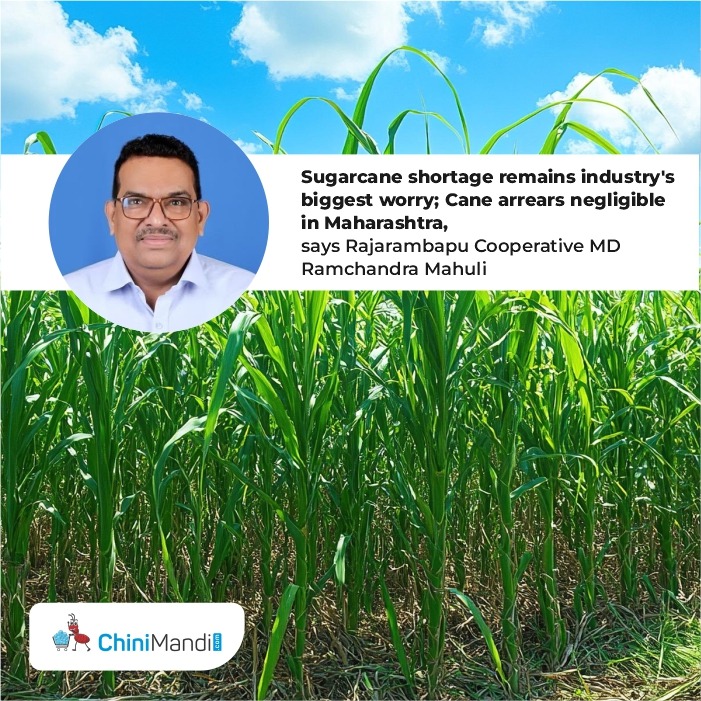
Adequate sugarcane availability for sugar production has been a bone of contention for the sugar mills every year. Ramchandra Dhirendrarao Mahuli, Managing Director, Rajarambapu Cooperative Sugar Factory, said that the past two seasons have been challenging for the industry due to less availability of sugarcane for crushing. He said that the industry should work together to increase sugarcane productivity.
He added that Maharashtra sugar mills have cleared almost all the cane arrears, barring a few factories, which he feels will be cleared soon.

Q. How do cooperative sugar mills assess the outlook for the 2026-27 sugar season?
We expect the 2026-27 season to be a tough year for the industry. The last two seasons were equally challenging for the mills due to a limited sugarcane crop. We crushed about 85 million MT and 104.5 million MT in the previous two seasons, with 85 and 105 working days, respectively.
The industry has to work together to increase sugarcane availability, increase operating days, and reduce costs. Cane availability should be at least 130-140 million MT per season.
Q. What are the biggest challenges currently facing cooperative sugar factories in India?
The biggest challenges facing the cooperative sugar factories in India are rising sugar production costs and lower revenue from sugar sales. This is adversely impacting the liquidity condition of the mills. We are unable to make timely cane price payments to farmers, which is increasing the arrears.
Q. What policy interventions from the Central and State Governments are most urgently required?
Both the Central and State Governments should provide easy funding options to reduce the interest burden on mills. The Sugarcane Control Order made it mandatory to pay cane dues within 14 days, and, as a result, sugar mills have no option but to borrow funds from banks. This leads to a vicious cycle. Liquidity concerns make it difficult for sugar mills to repay the loan on time.
Q. Is there a need to revise the Minimum Selling Price (MSP) of sugar? What would be a sustainable MSP?
The farmer’s interest should be protected. There is nothing wrong in increasing sugarcane FRP, but there should be a corresponding increase in MSP of sugar and Ethanol procurement prices, which should be properly linked to the FRP.
Q. What is the current status of cane payment arrears in cooperative mills?
Till June 2026, as per the Commissioner of Sugar’s report, Maharashtra sugar mills have paid about 99.26% of cane FRP. It is really a good achievement.
Some 8-10 factories have arrears, and I am confident they will clear it soon.
Q. What is your view on India’s future sugar export policy?
Government has put restrictions on sugar exports till 30th September to ensure sufficient availability of sugar in the domestic market during the festival months of October and November. If production improves in the new sugar season of 2026-27, the Government will allow exports. The Government is very proactive and safeguarding the interest of the industry.
Q. Social media is ripe with lies and myths about the ethanol programme. Why do you think these lies should be countered and the country should progress towards higher ethanol blending?
There are several advantages of Ethanol Blending in Petrol (EBP). It is a transformative step towards a cleaner, greener, and more self-reliant India.
The key benefits include:
* Reduces crude oil imports, saving valuable foreign exchange and improving energy security.
* Lowers harmful vehicle emissions, helping improve air quality and reduce the carbon footprint.
* Supports farmers by creating a stable market for sugarcane, maize, and other ethanol feedstocks.
* Strengthens the rural economy through higher agricultural income and increased employment opportunities.
* Promotes renewable energy by replacing a portion of fossil fuels with a biofuel derived from renewable resources.
* Enhances fuel quality as ethanol improves the octane rating of petrol, contributing to better engine performance in compatible vehicles.
* Supports India’s climate goals by reducing greenhouse gas emissions and advancing sustainable development.
The programme is not just a fuel policy. It is a national mission that benefits farmers, consumers, the environment, and the Indian economy alike. It is well accepted in countries like Brazil and America. There are no complaints from these countries. Then why shouldn’t it work in India? We are adopting the same technologies.















