
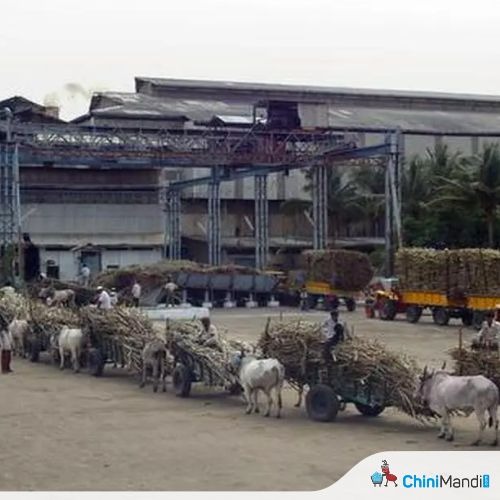
Mumbai: Three sugar mills in Maharashtra and Karnataka have stopped using bullock labour to transport sugarcane, joining the “100% Bull-Free” movement of People for the Ethical Treatment of Animals (PETA) India, Free Press Journal reported.
Karnataka-based Shri Bhimashankar Sahakari Sakkare Karkhane, located in Maragur, became the first cooperative sugar mill in the state to receive the certification. Maharashtra’s Utopian Sugars Ltd. in Solapur and ND Patil Sugars Pvt. Ltd. in Sangli have also received the “100% Bull-Free” certification from PETA India.

The three mills join Jai Hind Sugar Pvt. Ltd. and Lokmangal Mauli Mill Ltd., which were among the earlier sugar mills to receive the certification.
The move marks a shift for the sugar industry in Maharashtra and Karnataka, where bullocks have traditionally been used to transport sugarcane during the crushing season.
PETA India said the change was also driven by growing demand from Indian and international sugar buyers for products made through animal-free and mechanised supply chains.
The mills have worked with the Sugarcane Industry Mechanisation Project, an initiative of Maharashtra-based NGO Animal Rahat, to replace bullock carts with tractors and other mechanised vehicles. The project works with sugar mills to reduce the use of animals for transporting heavy loads.
PETA India senior manager for corporate projects Dr Kiran Ahuja said more sugar mills were moving towards mechanised sugarcane transport, showing that efficient operations could be combined with better treatment of animals.
“PETA India’s bull-free certification helps buyers identify sugar produced without the use of bull labour and celebrates mills leading this positive change,” Ahuja said.
Animal welfare groups have raised concerns about the conditions in which bullocks are used during the sugarcane harvest season in Maharashtra. They say the animals are often made to pull sugarcane carts carrying loads that can be up to twice the legal limit.
Handlers may also use painful methods to control the animals in hot conditions, including sharp spikes, nail-studded devices, barbed wire and restrictive nose ropes, according to PETA India.
The organisation said bullocks are social animals and can suffer when they are isolated, overworked and kept without enough food, water, shelter or rest.
The shift to mechanised transport could also benefit migrant families who travel to sugar-producing areas during the harvest season and often face difficult working and living conditions while managing bullock carts, PETA India said.
Replacing bullock carts with tractors and trucks can reduce the use of animals, improve transport efficiency and safety and provide better working conditions for families involved in sugarcane transport, the organisation said.
A tractor can carry up to 18 tonnes of sugarcane in a single trip and can replace several bullocks, allowing owners more time to pursue other sources of income, PETA India said.















