
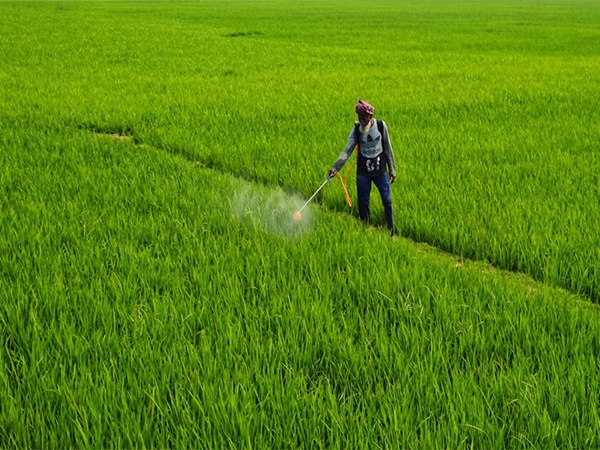
Lucknow: Uttar Pradesh, one of the top sugarcane producer state in the country is moving ahead with a clear plan to transform its agriculture sector into a strong, modern and export-driven system, with the government setting a long-term goal of turning the state into a global centre for sustainable and high-value farming by 2047.
Under the leadership of Chief Minister Yogi Adityanath, the state is promoting smart farming, modern technology and policies linked to markets to increase farmers’ income and strengthen agriculture. The government is working to position Uttar Pradesh as a leading agricultural model in the country, The Free Press Journal reported.

For 2047, the state has set key targets to increase the productivity of food grains, pulses and oilseeds. It plans to raise crop intensity to more than 250 per cent, reduce post-harvest losses to below 4 per cent and increase its share in national agricultural exports to over 15 per cent.
Efforts are also underway to expand organic farming and promote crop diversification. The government is focusing on improving productivity, boosting exports and linking farming practices with modern technology to make agriculture more efficient and profitable.
Uttar Pradesh has already emerged as a major agricultural state, ranking first in the country in the production of food grains, wheat, potatoes, sugarcane, vegetables and honey. Its role in the agriculture sector continues to grow, with the state now holding the second position in agricultural Gross Value Added (GVA). The sector’s GVA has reached around ₹4.66 lakh crore, accounting for nearly 15.7 per cent of the state’s GSVA.
Between 2017 and 2025, the state recorded steady growth in farm output, with wheat production rising by 16 per cent, food grains by 17 per cent, oilseeds by 34 per cent and pulses by 26 per cent. Alongside production, the government has taken steps to connect agriculture with markets and exports to ensure better returns for farmers.
Agricultural exports have increased more than two-fold, reaching around ₹7,139 crore in 2024-25. The state is working to provide better market access, improve product quality and encourage production based on export standards.
Irrigation and diversification have also been given priority. Expansion of micro-irrigation systems has helped farmers increase production while using less water, with the irrigated area growing by 33 per cent. Oilseed cultivation has expanded significantly, while pulse and food grain production have also seen notable growth, improving farm incomes.
The government is also promoting modern farming tools such as drone technology, digital agriculture services, organic farming and agriculture-based startups to strengthen the sector.
At the same time, the World Bank-supported UP AGREES project is playing an important role in boosting agriculture and fisheries in 28 districts of Purvanchal and Bundelkhand. The project, worth about $325 million, aims to increase farmers’ income, expand the use of modern technologies and achieve over 30 per cent growth in agricultural production, especially in less developed regions.















