
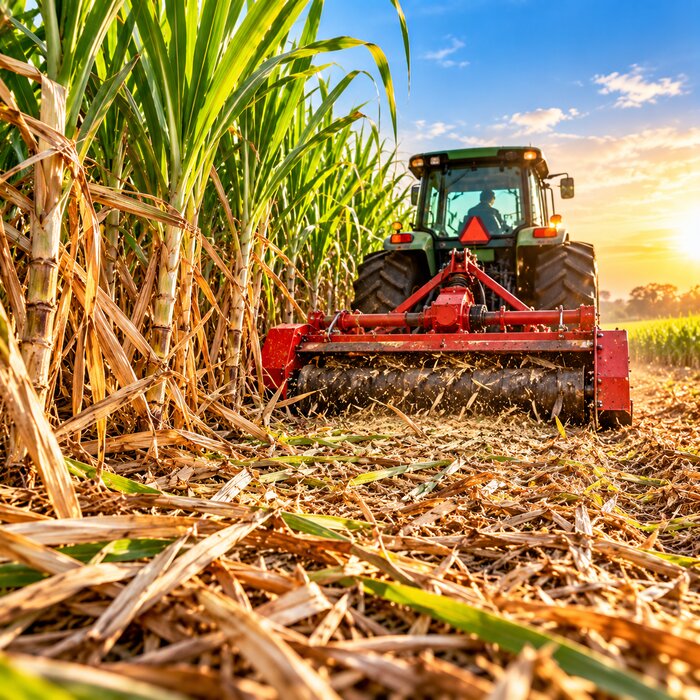
Lakhimpur Kheri: Sugarcane farmers in Uttar Pradesh’s Lakhimpur Kheri district are being encouraged to use mulchers to manage dry sugarcane leaves instead of burning them in fields, as the agriculture department promotes alternatives to reduce air pollution and improve soil health, News 18 reported.
Agriculture is a key contributor to the district’s economy, with thousands of farmers dependent on sugarcane and paddy cultivation. Dry sugarcane leaves left behind after harvesting often pose a disposal challenge, particularly when farmers need to prepare their fields for the next crop. In the absence of awareness about alternative methods, some farmers burn the residues, potentially harming the environment and beneficial soil organisms.

A mulcher cuts dry sugarcane leaves into small pieces and spreads them across the field. Under suitable moisture and environmental conditions, the residues gradually decompose and add organic matter to the soil. This can help improve soil structure, support nutrient availability and maintain long-term agricultural productivity.
Burning crop residues releases smoke and pollutants into the atmosphere and can affect beneficial microorganisms in the upper soil layer. It can also lead to the loss of nutrients contained in the residues. Mulching offers farmers an alternative by allowing the material to decompose in the field rather than being burned.
Agricultural scientist Dr SK Vishwakarma said farmers often burn crop residues because they want to clear their fields quickly for the next crop. However, modern agricultural machinery can help them manage and utilise the residues within their fields.
He explained that chopping the leaves into smaller pieces and spreading them across the field can facilitate decomposition. With adequate moisture and favourable conditions, the residues gradually break down into organic matter, helping improve soil quality.
Vishwakarma said farmers could treat dry sugarcane leaves as a resource for improving soil health instead of considering them waste. Proper residue management can also reduce the environmental damage associated with burning.
Soil fertility depends not only on chemical fertilisers but also on organic matter, microorganisms and earthworms. Incorporating crop residues into the soil can increase organic matter and provide a food source for beneficial organisms. Earthworms, in turn, help loosen the soil and improve the movement of air and water.
Regular and appropriate management of sugarcane residues can promote biological activity and help maintain soil quality over time. The use of mulchers is being promoted as an alternative that allows farmers to manage dry leaves while supporting more sustainable farming practices.















