
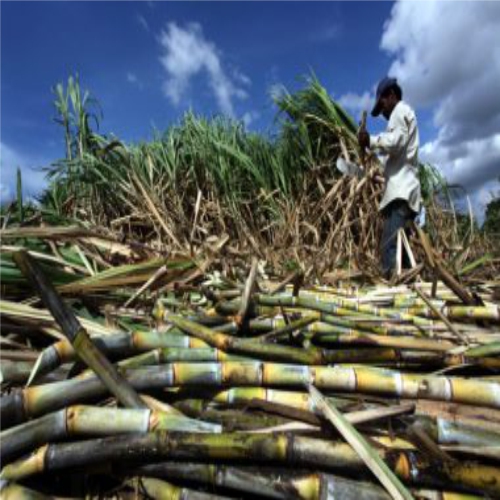
Lucknow: The Uttar Pradesh government’s Panchamrit Yojana is emerging as a major initiative aimed at strengthening sugarcane cultivation through scientific farming practices, with a focus on increasing farmer income, lowering production costs and promoting sustainable agriculture.
Introduced under the leadership of Chief Minister Yogi Adityanath, the programme was designed to support the broader goal of improving farm profitability by encouraging modern cultivation methods and better resource management, The Times of India reported.

Uttar Pradesh, the country’s largest sugarcane-producing state, has millions of farmers dependent on the crop. However, rising input costs, declining soil fertility, pressure on water resources and uneven productivity have remained persistent challenges for the sector.
To address these concerns, the Panchamrit Yojana promotes five integrated agricultural practices intended to improve yields while reducing cultivation expenses.
The first component encourages sugarcane planting through the trench method instead of conventional flat-field planting. The approach supports stronger root growth, improves water retention and helps increase productivity.
The second intervention focuses on scientific ratoon crop management, allowing farmers to improve yields from subsequent crops grown from harvested cane while reducing the cost of replanting.
Under the third component, farmers adopt trash mulching by spreading sugarcane leaves and crop residues across fields. This helps retain soil moisture, suppress weed growth and improve soil fertility through increased organic matter.
Drip irrigation forms the fourth pillar of the scheme and promotes efficient use of water and fertilisers by delivering inputs directly to plant roots, particularly benefiting regions facing water constraints.
The fifth component encourages intercropping, allowing farmers to cultivate additional crops between sugarcane rows to generate supplementary income, improve land use and reduce dependence on a single crop.
The scheme aims to increase sugarcane productivity, lower cultivation costs, improve farm returns, strengthen soil health and promote water conservation. It also seeks to encourage adoption of modern agricultural technologies and support additional earnings through diversified farming.
For implementation, the Sugarcane Development Department identified progressive farmers and established demonstration plots to showcase the benefits of Panchamrit practices.
Initially, more than 2,000 farmers were selected to develop model farms that serve as learning centres for surrounding farming communities.
The government also supports implementation through technical guidance, training programmes, field demonstrations and extension services provided by sugarcane development agencies.
Officials say farmers adopting the model can benefit from higher yields, lower spending on irrigation and farm inputs, additional income opportunities and improved resilience to changing climatic conditions.
The programme is also expected to support wider agricultural goals including improved soil quality, lower crop residue burning, more efficient water use and adoption of sustainable cultivation practices.















