
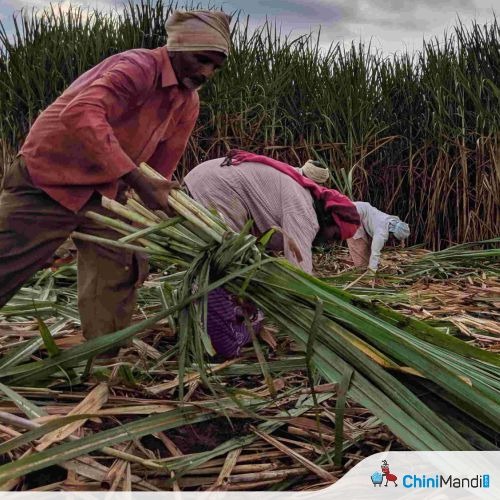
Latur: Farmers in drought-hit Latur district of Maharashtra are cutting standing sugarcane crops to feed their livestock as a severe fodder shortage leaves them with few alternatives, forcing them to sacrifice potential crop income to keep their cattle alive, The New Indian Express reported.
Poor rainfall has dried up grazing lands and reduced the availability of green fodder, compelling farmers to use standing sugarcane as animal feed. The situation has added to the financial pressure on the agrarian economy in the region.

The Maharashtra government has declared drought in 265 of the State’s 358 talukas, accounting for nearly 74% of the total, citing rainfall deficiency. It has announced relief measures including restructuring of crop loans, concessions on land revenue and subsidies on power bills.
Narayan Gude, a farmer from Kavha village, cultivates seven acres and rears seven buffaloes, two cows and several calves. With fodder becoming scarce, he said he has been forced to cut his standing sugarcane crop to feed the animals.
“There is simply no fodder because the rains failed. We have no choice but to harvest standing sugarcane crops,” Gude told PTI.
He said the shortage of fodder and water has also affected milk production, with his herd’s daily output falling sharply to just 10-12 litres.
Gude said nearly half a tonne of sugarcane is required every day to feed his livestock.
The rainfall deficit has also damaged other crops in the region. Gude said his soybean crop had suffered extensive losses, with the yield expected to fall below half a quintal per acre.
“We are now using chopped sugarcane mixed with soybean residue as fodder,” he said, while urging the State government to immediately set up official fodder camps in the region.
For farmers in Marathwada, livestock provides an important financial buffer during periods of poor crop income. However, falling milk production caused by inadequate nutrition and water scarcity is putting this additional source of income under further pressure.
Farmers are consequently facing losses on both fronts, with their standing agricultural crops being diverted to livestock feed while reduced milk yields cut their supplementary daily earnings.















